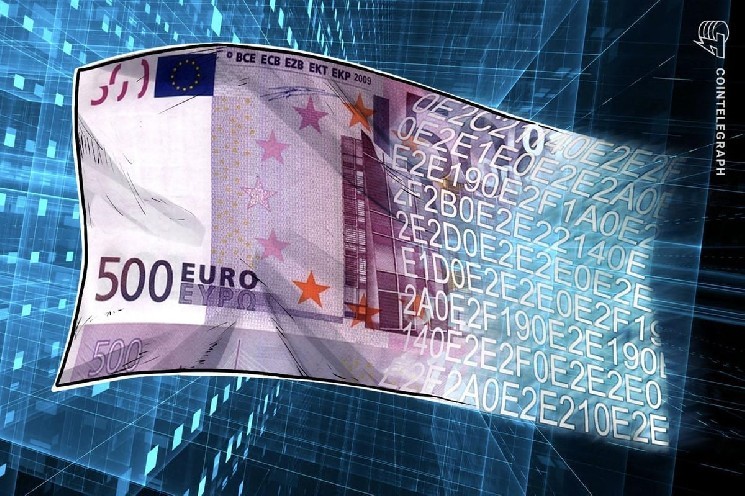
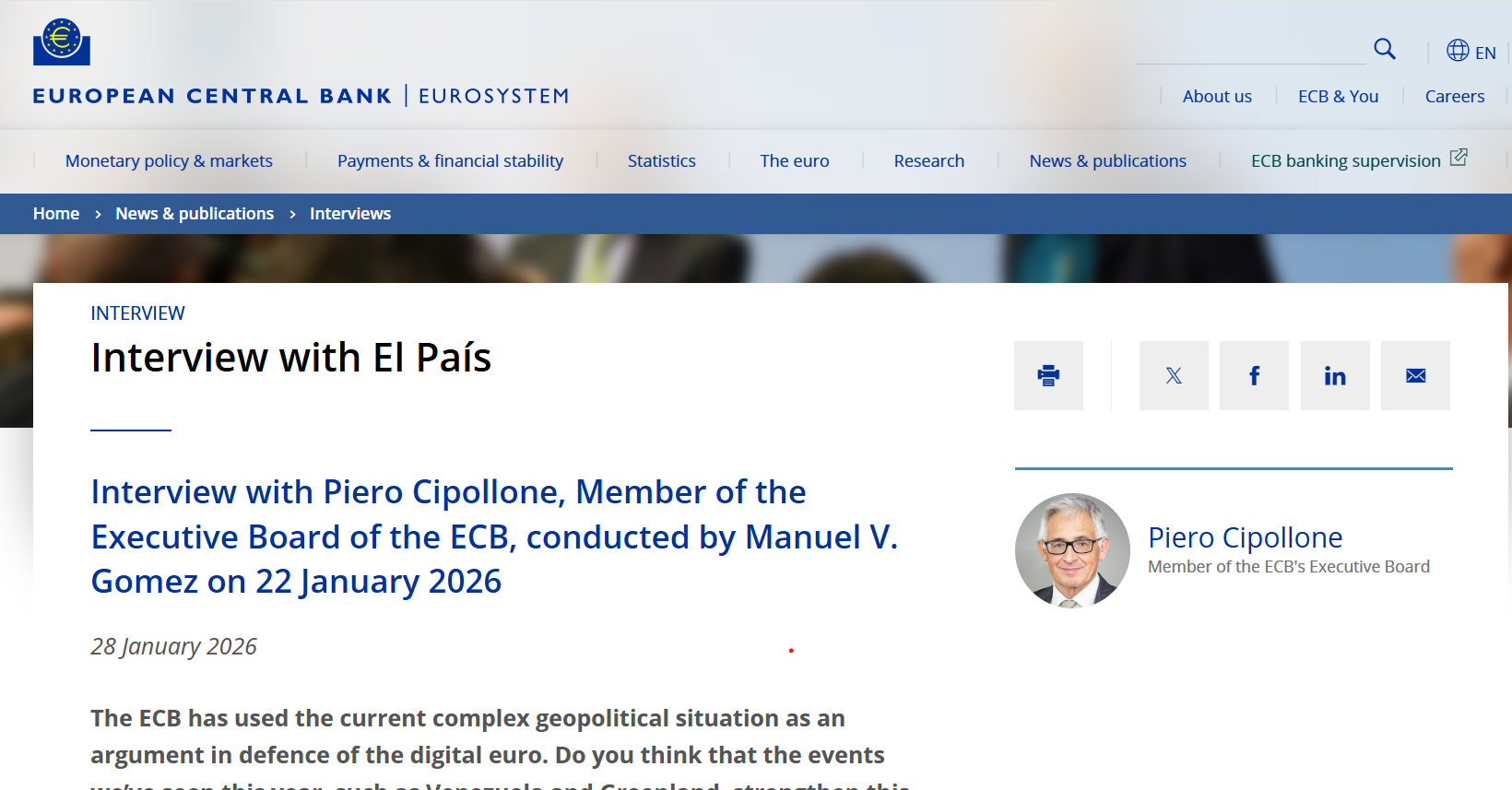
Rising geopolitical tensions are strengthening the case for a European-controlled digital payments system, according to European Central Bank (ECB) executive board member Piero Cipollone.
In an interview with Spanish newspaper El País, shared by the ECB on Wednesday, Cipollone described the proposed digital euro as “public money in digital form,” arguing that it was needed to complement cash and address an increasingly fragmented payments landscape in Europe, especially as e-commerce grows.
He noted that cash accounted for around a quarter (24%) of day-to-day transaction value in 2024, down sharply from 2019 (40%), and said the ECB had a responsibility to adapt how it provided money as a public good.
Geopolitics reshape Europe’s payments debate
Cipollone tied that mandate directly to geopolitics, warning that the “weaponisation of every conceivable tool” and rising global tensions reinforced the need for a European retail payment system “fully under our control,” built on European technology and infrastructure rather than non-European providers.
Related: Digital euro unlikely to launch before 2029, ECB board member says
He argued that such a system should be capable of meeting all of Europe’s payment needs without creating “excessive dependencies” on foreign schemes.
The ECB official also highlighted the legal tender status of the digital euro, stating that any merchant that currently accepts digital payments “will have to accept” it, implying a de facto mandatory acceptance regime for digital euro payments.
Digital euro to drive unified EU payments
Cipollone rejected calls to delay the project in favor of waiting for a purely private alternative, noting that the ECB has “been calling on the private sector to come up with a pan-European solution for many years now.”
Instead, he argued that introducing a digital euro with a single, open standard accepted by all merchants would make it more likely that banks and fintechs would finally deliver a truly pan-European retail payments layer, rather than crowding them out.
Cipollone also pushed back on suggestions that the digital euro should exist only in an offline form.
He argued that one of the core problems the project was meant to solve was the lack of a viable European payment method for e-commerce, and questioned how an offline-only solution could function in online transactions.
His comments followed an open letter on Jan. 11 from about 70 economists and policymakers urging EU lawmakers to “let the public interest prevail” on the digital euro file and warning that further delays could deepen Europe’s dependence on dominant private and non-European payment providers.
Cointelegraph reached out to Piero Cipollone’s office for comment, but had not received a response by publication.
Magazine: How crypto laws changed in 2025 — and how they’ll change in 2026