
The number of crypto professionals receiving salaries in digital assets has tripled over the past year, with 9.6% now paid in stablecoins, according to a report by venture capital company Pantera Capital.
Based on over 1,600 responses from crypto professionals across 77 countries, the report points to a shift toward blockchain-native payroll systems and growing institutional trust in dollar-backed assets, like USDC Coin (USDC) and USDt (USDT).
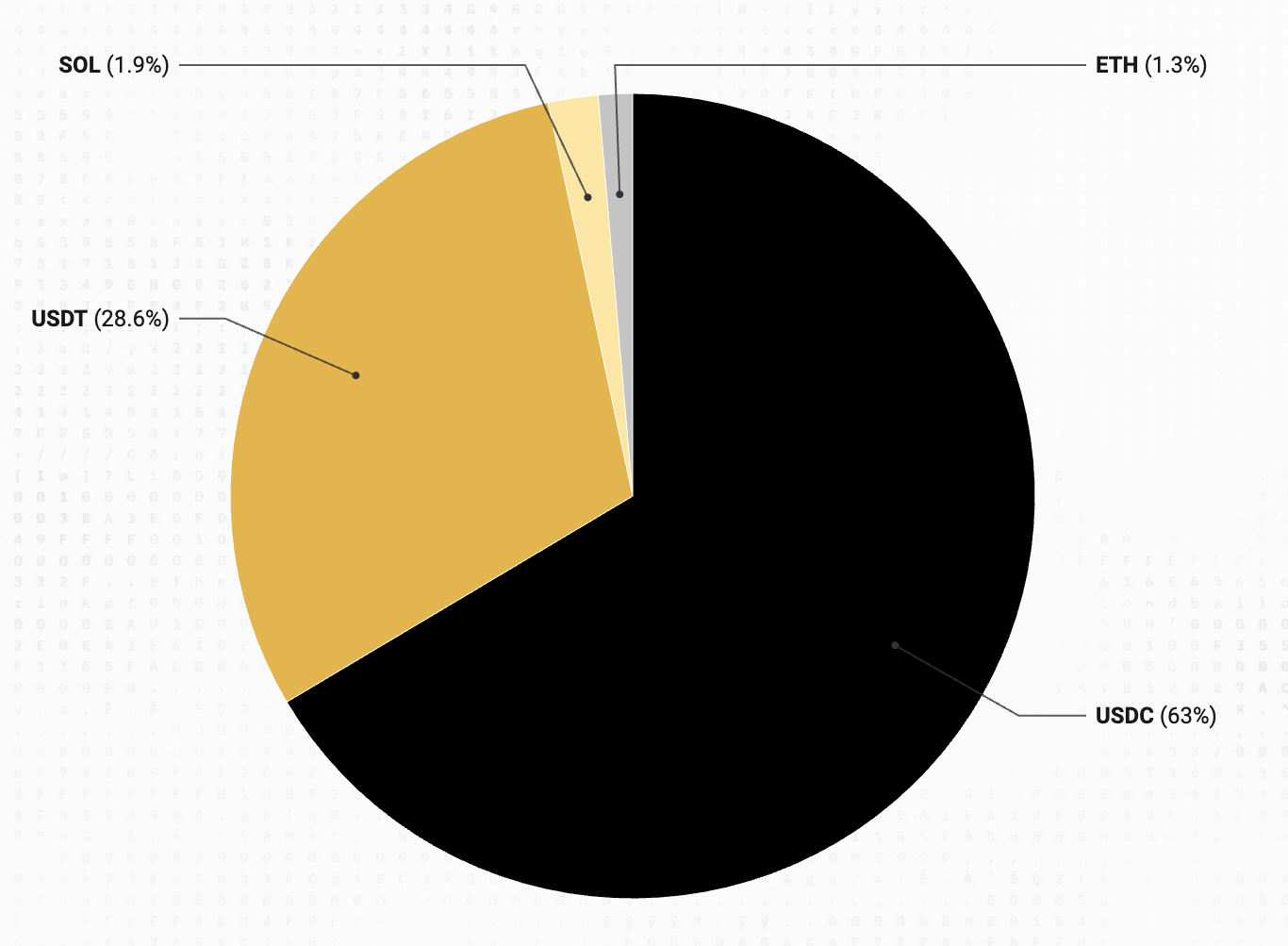
Circle’s USDC led the way, accounting for 63% of all crypto payrolls, despite Tether’s USDt being the most traded stablecoin by volume worldwide.
“We initially thought this was due to our survey skewing more western,” the report says. “After digging in further, we found it very interesting that none of the major payroll providers in the space (Deel, Remote, Rippling) offer USDT for payroll.”
Combined, the two stablecoins accounted for over 90% of reported payouts. According to DeFiLlama, the total market capitalization of all stablecoins stood at $268.6 billion at the time of writing.
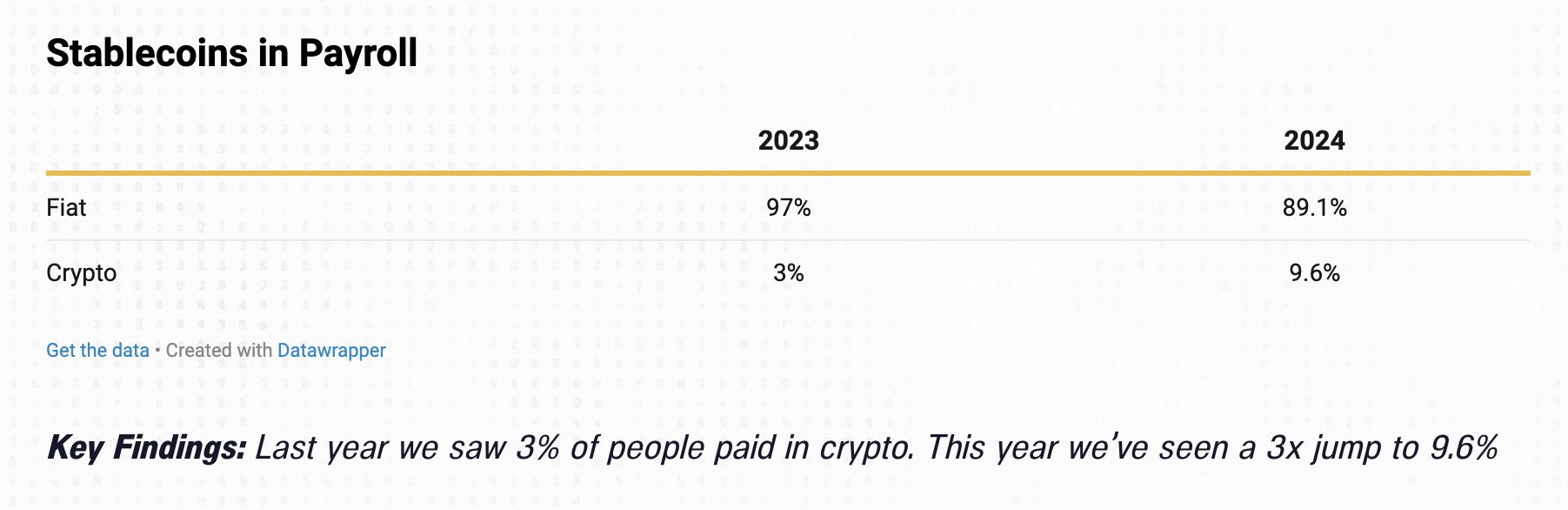
According to the report, token-based compensation is also increasingly structured around long-term alignment, with nearly 88% of vesting schedules now set to four years, up from 64% the year before.
The findings suggest that in the blockchain industry, hands-on experience and technical expertise often outweigh academic credentials. Professionals with a bachelor’s degree earned an average salary of $286,039, notably higher than those with a master’s at $214,359 or a doctorate at $226,858.
Circle’s enterprise push
Circle is aggressively positioning USDC as a core tool for institutional payments, payroll and B2B financial infrastructure, not just trading.
In March 2024, the company partnered with Intercontinental Exchange (ICE), the NY Stock Exchange parent firm, to explore USDC and tokenized fund integration in global derivatives markets.
Two months later, Circle applied for a federal trust bank charter with the US Office of the Comptroller of the Currency, part of its long-term strategy to provide regulated infrastructure for stablecoin payments, custody and settlement.
In July, US President Donald Trump signed the GENIUS Act into law, establishing a bipartisan regulatory framework for stablecoin issuers like Circle. Supporters of the bill cited USDC as a model for compliant digital dollars.
Magazine: SEC’s U-turn on crypto leaves key questions unanswered