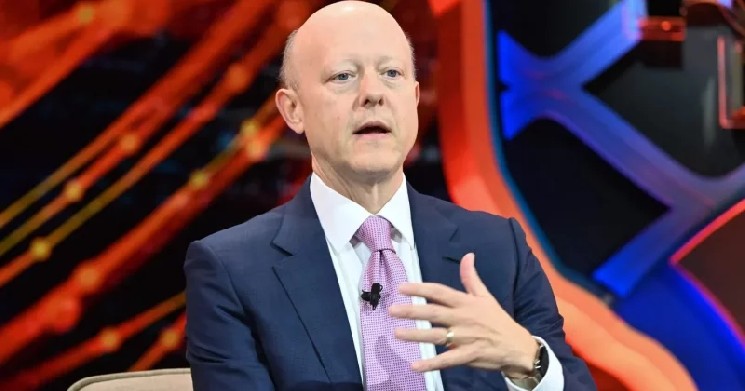
Jeremy Allaire, the CEO of Circle, is making a bold claim: every financial institution in the world now has a mandate to implement digital assets. Not “should consider” or “might benefit from.” A mandate.
Coming from the head of the company behind $USDC, the second-largest stablecoin by market cap, that statement carries a certain amount of self-interest. But it also carries a certain amount of truth, especially in the wake of new US legislation that has fundamentally changed the regulatory landscape for stablecoins and tokenized finance.
The regulatory trigger
The $GENIUS Act, signed into law in July 2025, established the first federal framework for payment stablecoins in the United States. For years, the crypto industry operated in a regulatory gray zone where banks couldn’t touch stablecoins without inviting uncomfortable questions from compliance departments and regulators alike. That ambiguity is now dissolving.
Allaire has been laying the groundwork for this moment for years. He testified before Congress in June 2023, advocating for a clear regulatory framework for stablecoins and digital dollars. That testimony, combined with persistent lobbying from across the crypto industry, contributed to the legislative momentum that eventually produced the $GENIUS Act.
The acronym, by the way, stands for “Generally Understanding Neutral Integrated Usage Standards.” Washington’s talent for tortured backronyms remains undefeated.
Why stablecoins are the entry point
Allaire’s argument isn’t that every bank needs to start trading memecoins. The thesis is more specific and, frankly, more compelling. He sees public blockchains as settlement infrastructure, and stablecoins as the mechanism that makes that infrastructure useful to traditional finance.
On Circle’s “The Money Movement” podcast, Allaire has outlined a vision where institutions engage with digital assets primarily as a settling mechanism on public blockchains. In English: instead of waiting days for cross-border payments to clear through a chain of correspondent banks, a stablecoin transaction on a blockchain can settle in seconds.
Circle has noted substantial interest in $USDC for payment solutions, with increased on-chain activity particularly on Solana. That blockchain’s speed and low transaction costs make it attractive for the kind of high-volume, low-value payment processing that traditional finance handles in enormous quantities every day.
The bigger picture: tokenization and AI economies
Allaire’s vision extends beyond stablecoins into broader tokenization of financial assets. The idea is straightforward: if you can put a dollar on a blockchain, you can put a bond there too. Or a share of stock. Or a piece of real estate. Each of these becomes programmable, tradable around the clock, and accessible to a global pool of investors without the friction of traditional custodial chains.
He has also pointed to the anticipated rise of AI-governed economies as another driver. As artificial intelligence systems increasingly manage financial transactions and portfolio decisions, they’ll need digital-native assets to work with. An AI agent can interact with a smart contract. It cannot walk into a bank branch and fill out a wire transfer form.
Circle has been forming partnerships to position itself at the center of this shift. The strategic direction is clear: make $USDC the default stablecoin for institutional use, across as many blockchains and platforms as possible.
What this means for investors
The risk, as always, is execution. Regulatory frameworks can shift. Technology can fail. And the gap between a CEO’s vision and market reality can be vast. Allaire is talking his own book here, and investors should calibrate accordingly. Circle benefits enormously from a world where every bank uses $USDC.
For investors watching this space, the key metrics to track are institutional $USDC adoption rates, on-chain settlement volumes on major blockchains, and the number of traditional financial firms announcing stablecoin or tokenization strategies. Those numbers will tell you whether Allaire’s mandate is becoming reality, or whether it remains, for now, a very well-positioned aspiration.