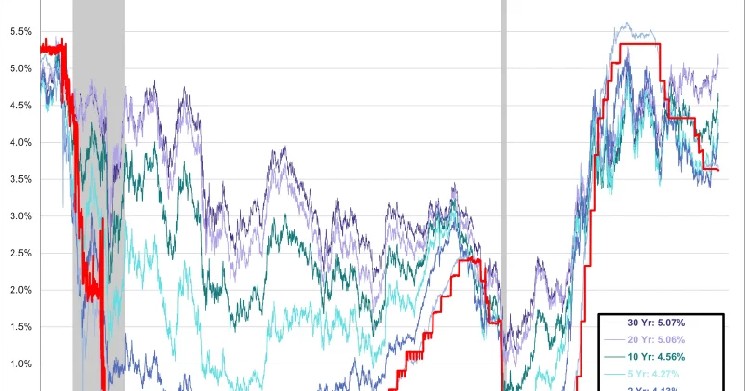
The bond market is repricing reality. Since Kevin Warsh took the oath as the 17th Chair of the Federal Reserve on May 22, 2026, the Treasury yield curve has flattened noticeably, with the closely watched 2s10s spread compressing as traders abandon their earlier bets on aggressive rate cuts and brace for a prolonged period of elevated borrowing costs.
The 10-year Treasury yield has pushed past 4.4%, a level that reflects just how quickly Wall Street has recalibrated its assumptions about the direction of monetary policy. Where markets once priced in a series of cuts, the consensus has shifted toward restraint, or possibly even rate hikes, under a chairman who has made inflation control the centerpiece of his early tenure.
Why the yield curve is flattening
The backdrop makes his hawkish posture understandable. Rising inflation pressures tied to geopolitical tensions, particularly surrounding the Iran conflict, have pushed gasoline prices higher and complicated the Fed’s calculus. Warsh inherited an economy where price stability wasn’t a given, and his early signals suggest he’s not interested in easing up prematurely.
The Senate confirmed him by a vote of 54 to 45, a margin that was tight enough to underscore the political stakes of his appointment. He succeeds Jerome Powell at a moment when the Fed’s credibility on inflation is being tested by forces largely outside its control.
Warsh’s track record and crypto connections
Warsh is not new to the Fed. He served as a governor from 2006 to 2011, a stretch that included the global financial crisis. That experience forged a policymaker who saw firsthand what happens when financial instability spirals.
But what makes Warsh genuinely unusual among central bankers is his relationship with digital assets. During his confirmation process, he disclosed investments in more than 30 cryptocurrency-related ventures. Back in 2018, Warsh described Bitcoin as a potential “sustainable store of value,” drawing a comparison to gold.
What this means for investors
The immediate implications of a higher-for-longer rate environment are straightforward and somewhat painful for anyone holding growth assets. When Treasury yields rise, they create competition for capital. Why take on the risk of equities or crypto when you can earn 4.4% on a government bond?
But Warsh’s personal involvement in the crypto ecosystem introduces a countervailing force. A Fed chair with investments in over 30 crypto projects has both the knowledge and, arguably, the incentive to pursue regulatory clarity rather than regulatory hostility. Clearer rules of the road have been the single most requested item on institutional investors’ wish lists for years.
Traders should also watch the 2s10s spread closely in the coming weeks. If it continues to compress or inverts outright, it would signal that the market believes Warsh is willing to push the economy toward a slowdown to stamp out inflation.