Zach Pandl Says Bitcoin May Have Bottomed if the Fed Avoids Another Rate Increase
Bitcoin’s bear market may be closer to its end than historic trading patterns suggest, according to Grayscale, which argues that macroeconomic conditions are becoming more important than the cryptocurrency’s traditional four-year cycle.
Zach Pandl, Grayscale’s head of research, outlined two competing views on when the downturn could bottom. The first treats bitcoin’s halving schedule as the primary driver of its boom-and-bust pattern.
Previous bear markets have generally reached their lowest point about one year after a cycle peak and roughly two and a half years after a halving. Those downturns produced average losses of nearly 80%, Grayscale said.
Under that framework, bitcoin may have further to fall before reaching a bottom in September or October.
Historic Cycle Points to Further Weakness
Supporters of the four-year model expect supply reductions from bitcoin halvings to drive repeated periods of expansion and contraction.
That view assumes the current decline will broadly follow earlier cycles. A similar outcome would expose the market to lower prices before a sustained recovery begins.
“The four-year cycle view predicts lower lows for bitcoin’s price,” Pandl said.
Still, relying on past cycles has become more difficult as bitcoin’s investor base and market structure have evolved. Institutional funds, listed investment products and changing monetary conditions now play a larger role in determining demand. Grayscale believes those developments may have weakened the influence of the halving cycle.
Fed Policy May Offer a Better Signal
The firm favors a macroeconomic framework that treats bitcoin more like other major asset classes.
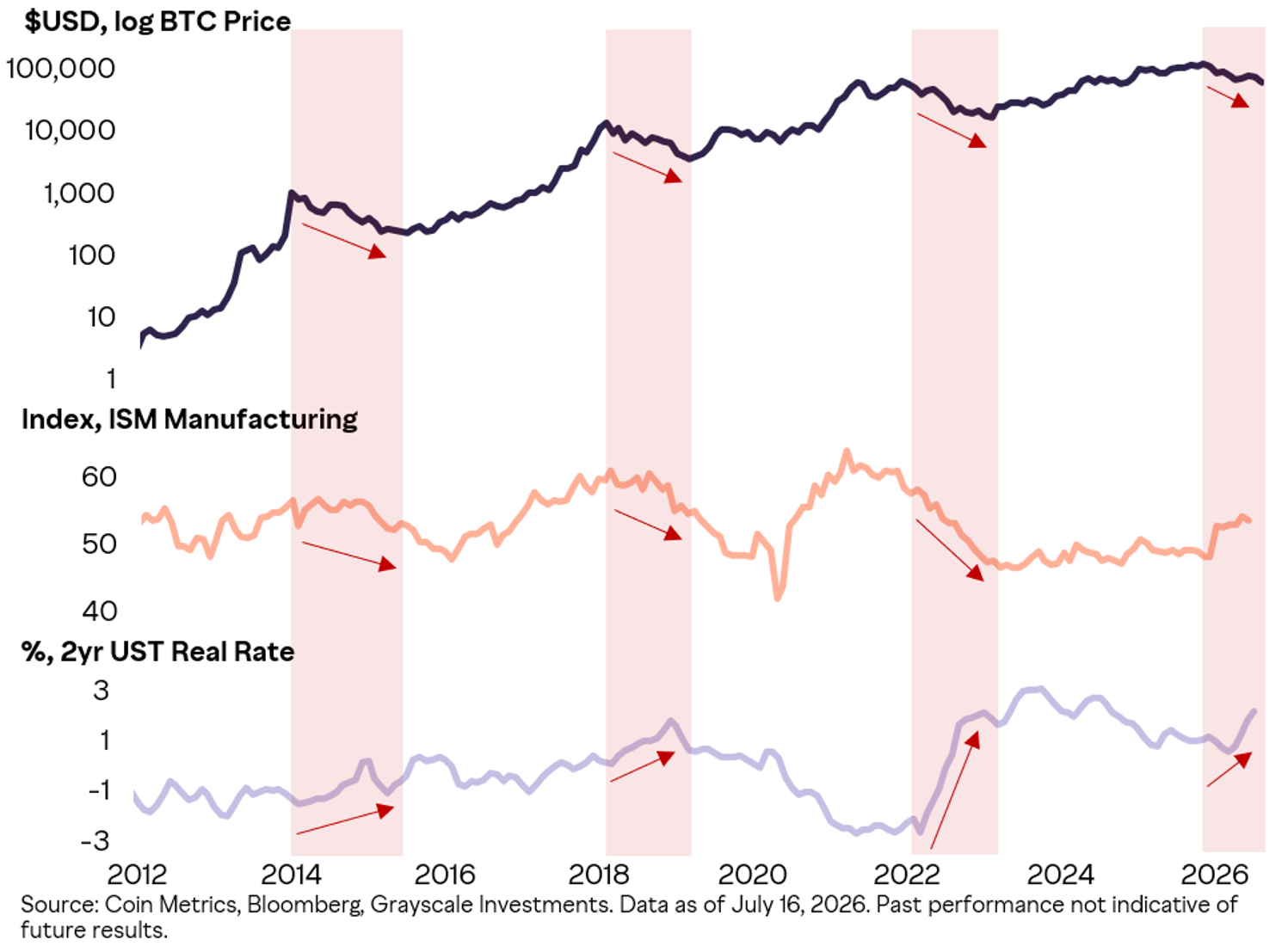
Past crypto bear markets have often coincided with weaker economic growth or rising real interest rates. The current downturn has also unfolded alongside tighter Federal Reserve policy expectations and an increase in inflation-adjusted yields.
If those pressures ease, bitcoin could recover without repeating the full drawdowns seen in previous cycles.
“If the Fed forgoes rate hikes and economic growth holds up well, bitcoin’s price may already have bottomed,” Pandl said.
That outlook depends heavily on the resilience of the U.S. economy. A renewed rise in interest rates or a sharp slowdown in growth could place fresh pressure on risk assets, including bitcoin.
Grayscale’s analysis does not dismiss the possibility of another decline. Instead, it suggests that investors should look beyond the halving calendar when assessing the market.
The debate reflects bitcoin’s changing position in global finance. Its supply remains governed by code, but its price is increasingly shaped by the same forces that move stocks, bonds and other risk-sensitive assets.