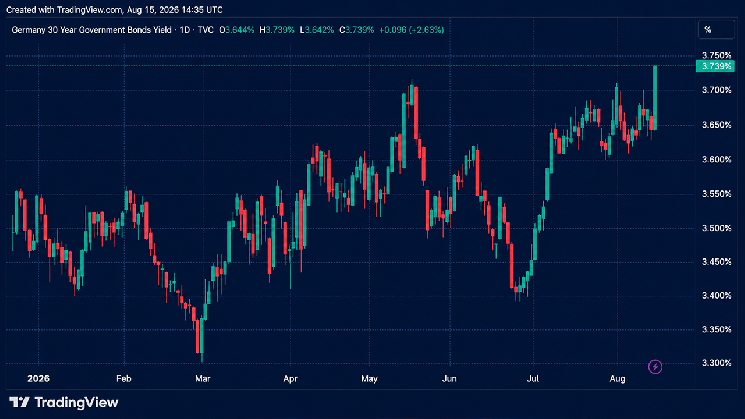
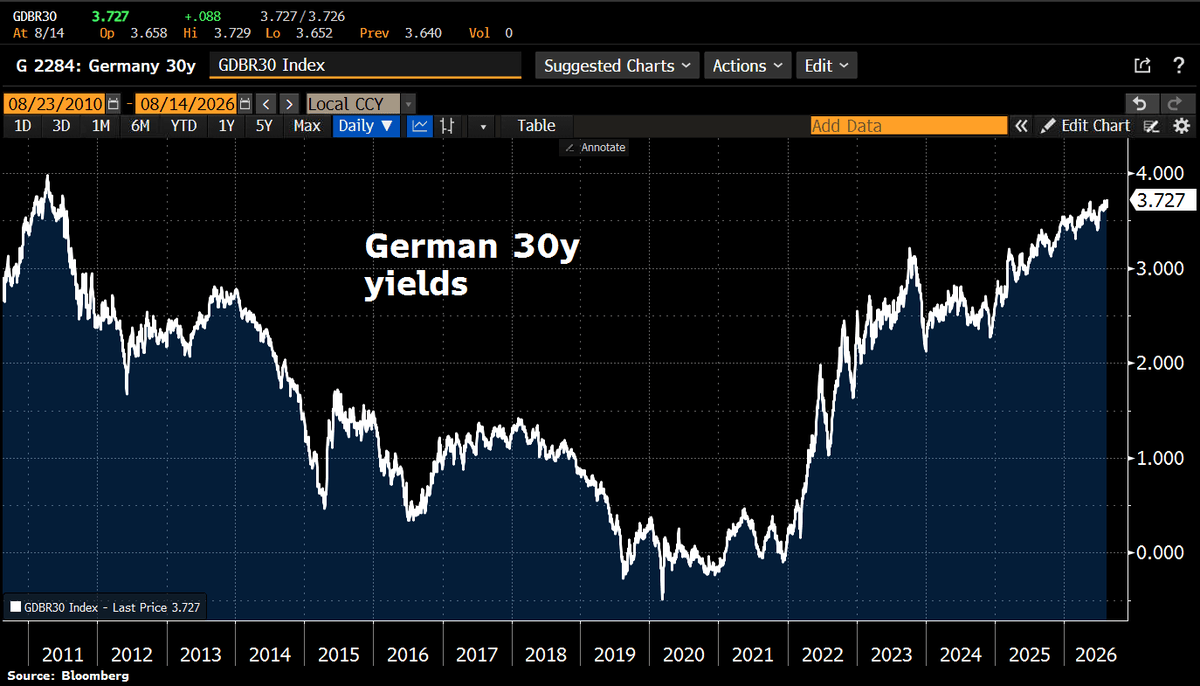
The synchronized selloff has shoved major long-term yields to levels unseen for years, and in some cases decades. U.S. 30-year Treasury yields hit about 5.25%, their highest since 2001, while Germany’s 30-year Bund yield neared 3.73%, its highest since 2011.
“Good Morning from Germany, where the bond market is sending an unmistakable message: 30y Bund yields have climbed to 3.73%, the highest level since 2011,” German journalist, author and senior financial editor Holger Zschäpitz wrote on X. “Germany is now paying borrowing costs last seen during the euro-crisis era. The age of ultra-cheap money is history.”
France’s long-term OAT yield, short for Obligations Assimilables du Trésor, has returned to its global-financial-crisis range. Japan’s 5-year government bond yield climbed above 2.14%, a clear break after years of artificially easy monetary policy.
Investors Demand to Be Paid
A bond yield is the price governments pay investors for their money. When yields jump, bond prices drop, and borrowing gets more expensive, fast.
For more than a decade after the 2008 financial crisis, central banks pinned rates down and swallowed enormous piles of government debt. That forced yields lower, even below zero in Europe and Japan. The pandemic doubled down on the trade: governments borrowed freely while central banks kept the market from asking hard questions.
That arrangement is breaking. Investors lending for decades now want protection against inflation, runaway issuance and the shrinking purchasing power of the cash they will get back.
“Big rise in long-term government bond yields for Europe’s high-debt countries this week,” explained Robin Brooks, Senior Fellow in the Economic Studies program at the Brookings Institution. “France is the most notable, with 10y10y (orange) and 10y20y (red) forward yields moving to new all-time highs.”
Brooks added:
“Market patience with fiscal dysfunction is running out.”
Debt Markets Start Calling the Shots
The pressure point is fiscal policy, the widening gap between government spending and tax revenue. The United States, France, Japan, and other advanced economies piled up massive debt while adding defense, infrastructure, energy, and aging-population bills.
In the United States, annual federal interest costs have passed $1 trillion in recent tallies. Every refinancing cycle locks in higher rates, turning yesterday’s debt into tomorrow’s budget problem.
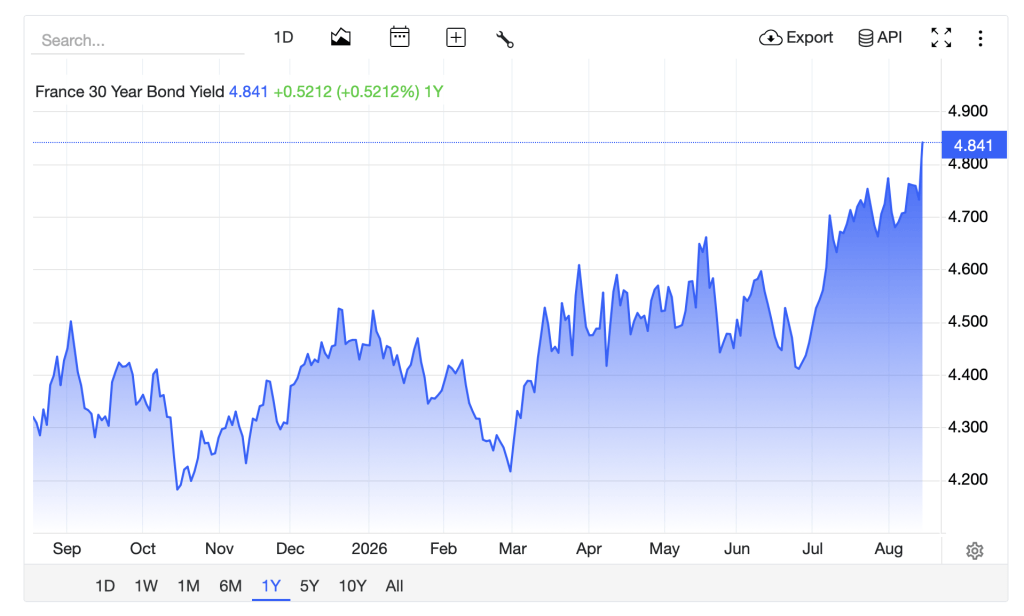
France has its own political and budget mess. Bond desks have watched spending talks and the debt outlook closely, helping push French yields higher relative to Germany’s benchmark bonds.
Germany, long treated as the eurozone’s safest borrower, is planning bigger outlays for infrastructure and defense. That means more bond supply, or more government IOUs competing for investor cash.
Central Banks Are Leaving the Bid
Japan’s move is hard to ignore because the Bank of Japan spent years suppressing yields through yield-curve control, a policy meant to hold borrowing costs down. As it slowly abandons that regime, markets are repricing to higher rates and far less official support.
“Cheap money was temporary,” the X account Wealthmoose wrote on X. “The debt is permanent. Now the bond market is sending the bill.”
The same shift is hitting elsewhere. The Federal Reserve and other central banks have cut bond holdings through quantitative tightening, pulling a huge buyer out of the market.
Governments are flooding the market with bonds while central banks buy less. Private investors can take the paper, but only at a higher yield. That extra compensation is the term premium, the charge for locking money away in a long bond.
The Bill Lands Beyond Government Budgets
Higher long-term yields hit households first through mortgage rates. In the United States, 30-year mortgage rates often track Treasury yields, making home purchases and refinancing costlier.
Businesses face higher rates when they issue long-term debt. Stocks also take a hit because richer bond yields compete for cash and cut the current value investors assign to distant profits. Savers, pension funds, and insurers can earn more from bonds. But the handoff is punishing for governments and borrowers raised on the cheap-money era.