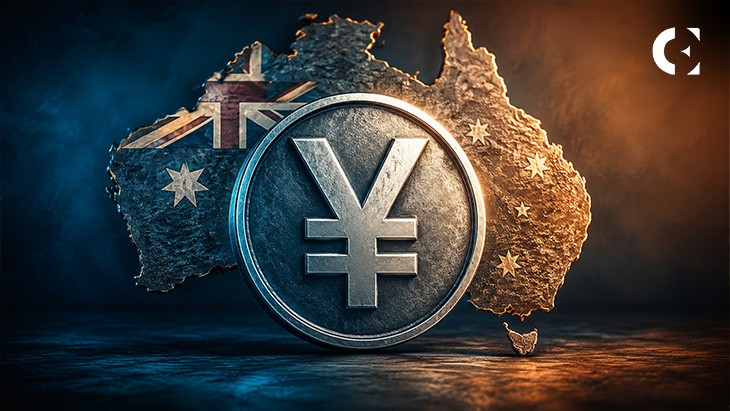
Australia’s second-largest superannuation fund has built its largest Japanese yen overweight in years while reducing U.S. dollar exposure. The move reflects a defined view on interest rates and currency valuation. It shows how the institution is positioning for macro uncertainty through traditional markets.
The Australian Retirement Trust (ART) manages around A$375 billion for 2.4 million members. It expanded the yen position over six months as the exchange rate moved toward 160 per dollar.
Senior portfolio manager Jimmy Louca said ART financed part of the trade by trimming greenback exposure. His explanation focused on relative value, energy costs, and monetary policy, giving the allocation a specific macro foundation.
How Rate Shifts and Yen Valuation Support ART’s Position
According to a report, the yen fell to 40-year lows in July, despite joint intervention by Japan and the United States. That decline left the currency well below Louca’s estimate of fair value.
Louca believes the drag from higher energy costs is already reflected in the exchange rate. He also thinks investors have placed too little weight on further Bank of Japan tightening.
Louca placed fair value near 150 yen per dollar, with the high 140s also possible. The rate stood around 159.21 when the allocation became public. A move to 150 would represent a yen appreciation of roughly 6%.
The currency stayed near that starting point later on Aug. 26. It traded around 159.34 per dollar after firm U.S. inflation data lifted the greenback. The reaction showed that near-term pressure could persist.
Market prices and economist surveys supported tighter Japanese policy, although they measured different expectations. Swaps implied an 80% probability of a September increase. A separate Reuters poll found 57% of economists expected action that month.
The other side of the currency pair has proved less stable. Markets priced about 50 basis points of U.S. cuts in January. Japan and Australia were then expected to tighten, while European rates were forecast to remain steady.
That outlook had changed by Aug. 26. Markets assigned a 40.1% chance of a September Federal Reserve increase after stronger inflation data. The reversal shows why January’s assumptions cannot serve as a current consensus or a fixed guide for ART’s position.
For ART, moving policy expectations makes a static forecast less useful. Its active currency approach allows the fund to respond as relative rates and exchange prices change. That flexibility does not remove the possibility of losses.
How the Trade Fits ART’s Portfolio
That moving backdrop explains why position size matters. The overweight sits within ART’s dynamic asset allocation program across diversified options. It adds about half a percentage point to the high-growth option, making it a tactical adjustment.
The currency move also builds on an earlier hedging decision. ART held about A$53 billion in U.S. stocks in January and planned to retain those shares. Instead of reducing equities, it increased protection against a weaker greenback.
The same plan considered leaving Japanese equities fully unhedged. Different hedging levels alter the foreign-exchange risk attached to existing assets without forcing a sale. Unhedged Japanese holdings gain in Australian-dollar terms only when the yen strengthens against the Australian dollar.
Several outcomes could still work against the allocation. The Bank of Japan could delay tightening, energy prices could stay elevated, or the U.S. dollar could recover. Any of those developments would weaken the expected return.
Even so, ART can monitor the thesis through policy rates, energy markets, and exchange values. Those observable inputs help managers adjust the exposure within an existing global portfolio. That connection to current holdings, rather than expected return alone, sets up the relevant comparison with crypto for institutional investors.
Where Bitcoin and Crypto Fit
Bitcoin enters the analysis at the level of portfolio function. Neither the yen disclosure nor ART’s earlier dollar strategy identifies a rejected crypto proposal. The evidence therefore does not support a direct contest between the assets.
$AMP offers a separate Australian example. The manager allocated about A$27 million to Bitcoin futures in 2024 and described the position as modest. Its December 2024 statement that the exposure would not increase is not a current policy update.
Japan’s Nationwide Business Corporate Pension Fund outlined another limited approach. It planned to place about 1% of a ¥21.3 billion portfolio in a passive multi-crypto vehicle during fiscal 2026. The available report describes an intention and does not confirm a completed investment.
Australia’s self-managed super sector shows wider direct participation. ATO-based December 2025 data valued its crypto holdings at A$3.25 billion. Despite that headline amount, digital assets represented only 0.3% of the sector’s A$1.06 trillion portfolio.
However, a 2023 Reuters analysis examined A$1.4 billion of crypto held in fiscal 2021. It estimated that a 40% market decline could have erased almost A$600 million.
What the Yen Position Signals
With those limits clear, ART’s allocation offers evidence about one manager, not every pension fund. The measured foreign-exchange position expresses a view on rates and valuation through established markets. Its limited size also keeps the risk connected to the wider portfolio.
A currency overlay can reshape exposure already created by overseas shares. ART paired greater U.S. hedging with possible unhedged Japanese assets. Bitcoin would add an independent source of price movement, so it would need a different purpose and risk limit.
However, $AMP’s Bitcoin futures position was described as modest, while the Japanese plan carried a 1% cap. ART’s yen exposure, by contrast, formed part of its active macro and hedging framework.
The central signal reflects institutional priorities. Australia’s pension fund used the yen to manage identifiable macro risks. Bitcoin and crypto remain separate allocation decisions requiring their own return case, governance framework, and tolerance for long-term volatility.
Related: BOJ September Rate Hike: What Happens to BTC, ETH and XRP if the Yen Strengthens?