Bitcoin ($BTC) sold off into the early European trading hours on Wednesday to hit local lows of $76,400, per data from CoinGecko.
Key points:
- Bitcoin’s apparent demand indicator turns negative again, with $BTC price dropping to a local low of $76,400 before reclaiming $77,000.
- USD/JPY drops sharply to 158.5, sparking speculation that another yen intervention has taken place.
- Asian equities sell off sharply as South Korea’s KOSPI falls 4.0% to 6,562.72 and Japan’s Nikkei 225 drops 2.9% to 64,325.64.
Bitcoin’s apparent demand flips negative again
The move in $BTC came after US spot Bitcoin exchange-traded funds (ETFs) recorded outflows of $236 million the day prior. Data from CryptoQuant now shows Bitcoin’s apparent demand turning negative once more after a brief reprieve during the August rally.
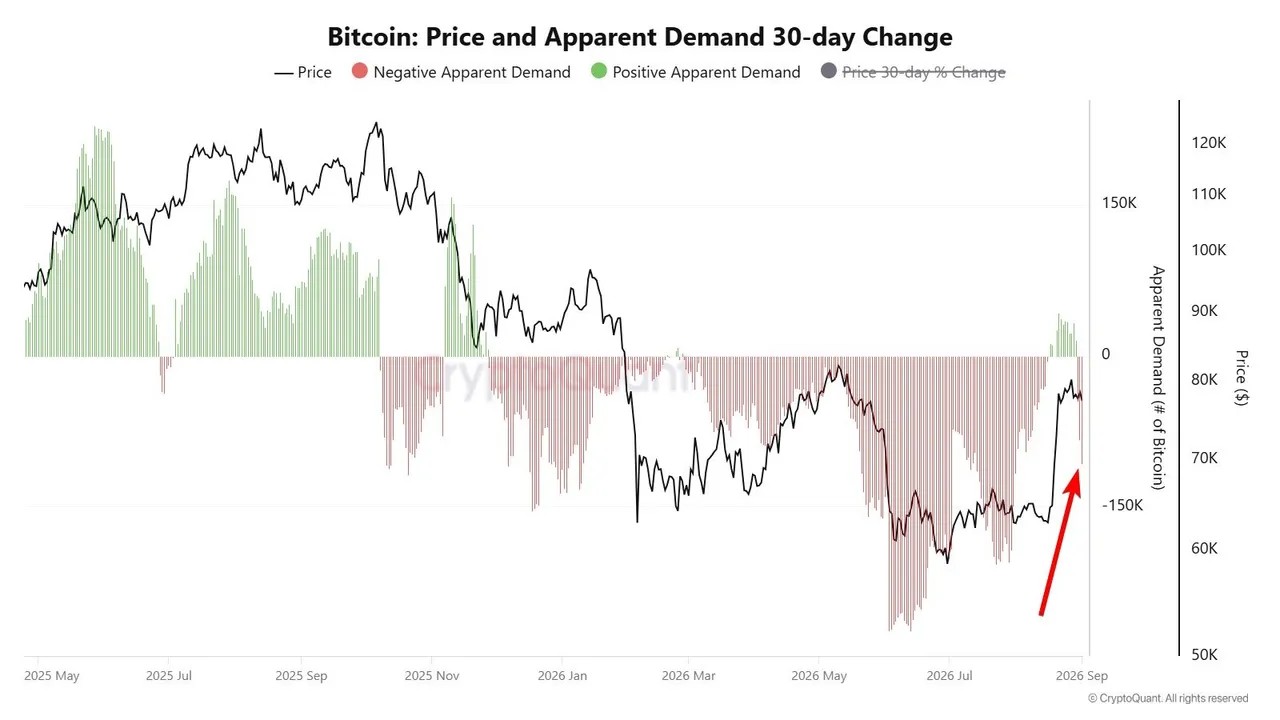
Bitcoin price and apparent demand, 30-day change. Source: CryptoQuant
The indicator is inspired by similar metrics from commodity markets and measures the difference between newly mined issuance and changes in inactive supply. Positive demand implies that old coins are waking up and the market is absorbing them along with new issuance. This is taken to be a sign of active spot demand. Negative readings mean coins are aging into dormancy faster than miners issue them.
At the time of writing, $BTC has reclaimed $77,000, but remains pinned under a cluster of resistance that we have previously reported on.
Bonds and Asian equities sell off
The global bond rout that Cointelegraph reported on Monday eased slightly as the US 10-year yield briefly dipped below 4.8%. There was inorganic price action in the USD/JPY pair at 13:00 UTC, which commentators widely took as a sign of another central bank intervention. USD/JPY declined to 158.5, retreating from the psychological 160 level widely seen as a line the Bank of Japan (BOJ) will defend. At the time of writing, no official announcement on the matter has been made.
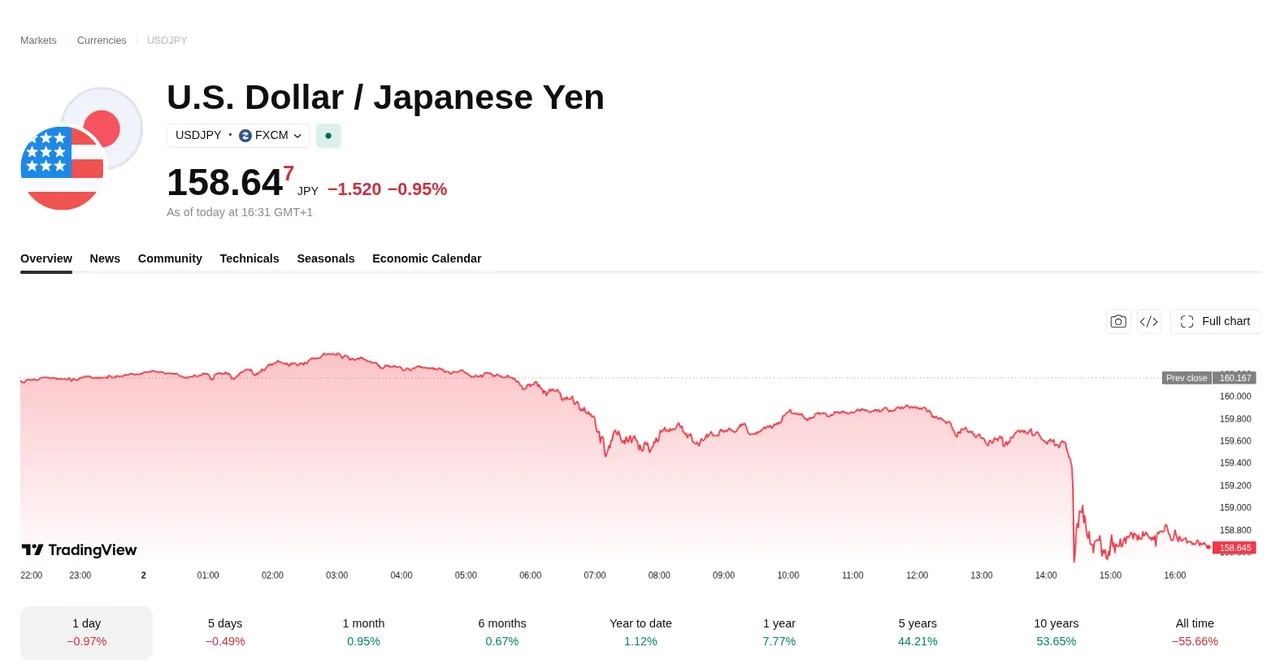
USD/JPY trading pair one-day chart. Source: TradingView
Asian equities, meanwhile, suffered steep declines, likely driven by soaring oil prices and further profit-taking in the AI sector. South Korea’s KOSPI led the decline, falling 4.0% to close at 6,562.72 as chipmakers SK Hynix and Samsung Electronics shed 4% and 4.7%, respectively.
Japan’s Nikkei 225 fell 2.9% to 64,325.64, dragged down by tech heavyweights including SoftBank Group, an OpenAI investor. Taiwan’s TAIEX rounded out the losses with a 1.7% drop. Back in July, Cointelegraph reported on the first cracks beginning to show on the US side of the AI trade, as credit spreads on hyperscalers rose significantly.