The total US dollar-pegged stablecoin market is projected to swell to $1.2 trillion by 2028, spurred on by comprehensive crypto regulations in the United States, according to crypto exchange Coinbase.
Coinbase said the projections mean the US Treasury issuance would have to be $5.3 billion per week over the next three years to satisfy demand from stablecoin issuers, who use short-term US Treasury bills as backing collateral for their digital fiat tokens.
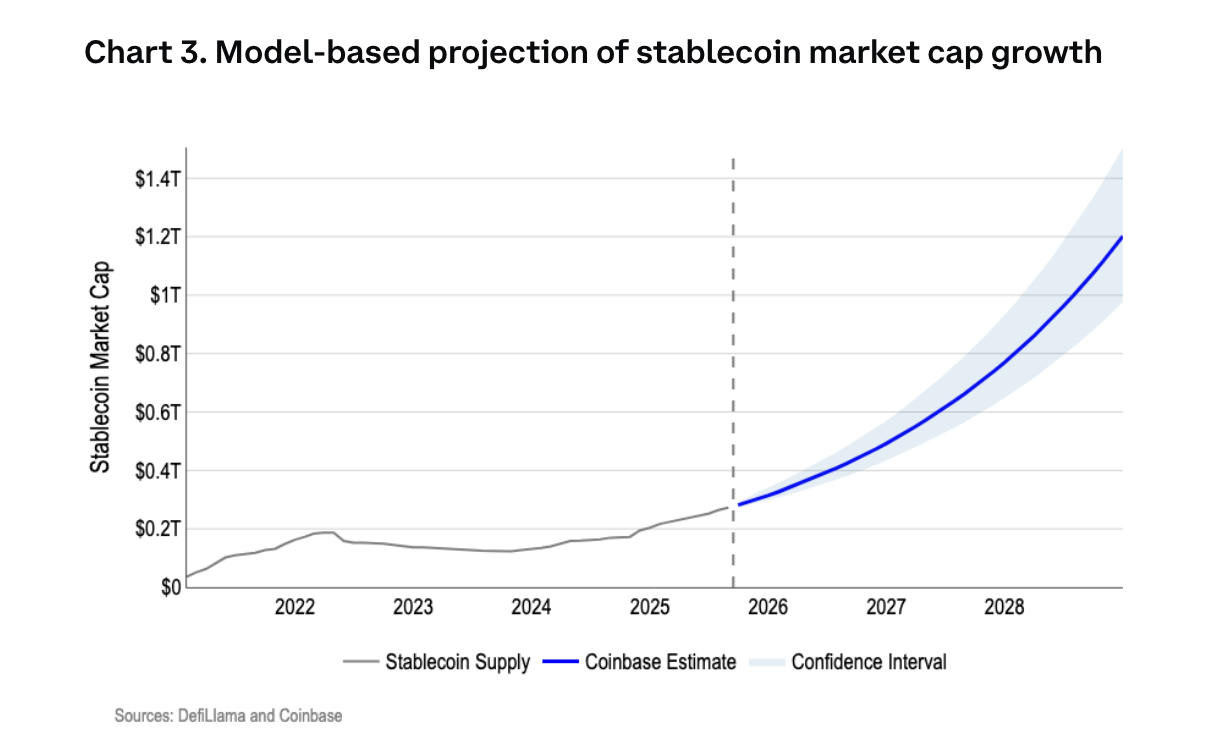
This issuance schedule would cause a minor and temporary drop in three-month Treasury yields of about 4.5 basis points (BPS), contrary to analyst predictions that demand from stablecoin issuers will significantly reduce the interest on US government debt. Coinbase wrote:
“We think the forecast doesn’t require unrealistically large or permanent rate dislocations to materialize; instead, it relies on incremental, policy-enabled adoption compounding over time.”
The passage of the GENIUS bill, a comprehensive regulatory framework for stablecoins in the US that will take effect in January 2027, is a catalyst for the growth of the stablecoin market, Coinbase said.
However, the legislation in the US has forced other countries to consider legalizing their own stablecoins to remain competitive with the dollar in the digital age.
Related: US Treasury calls for public comment on GENIUS stablecoin bill
Stablecoin sector grows as other countries signal they are joining the race
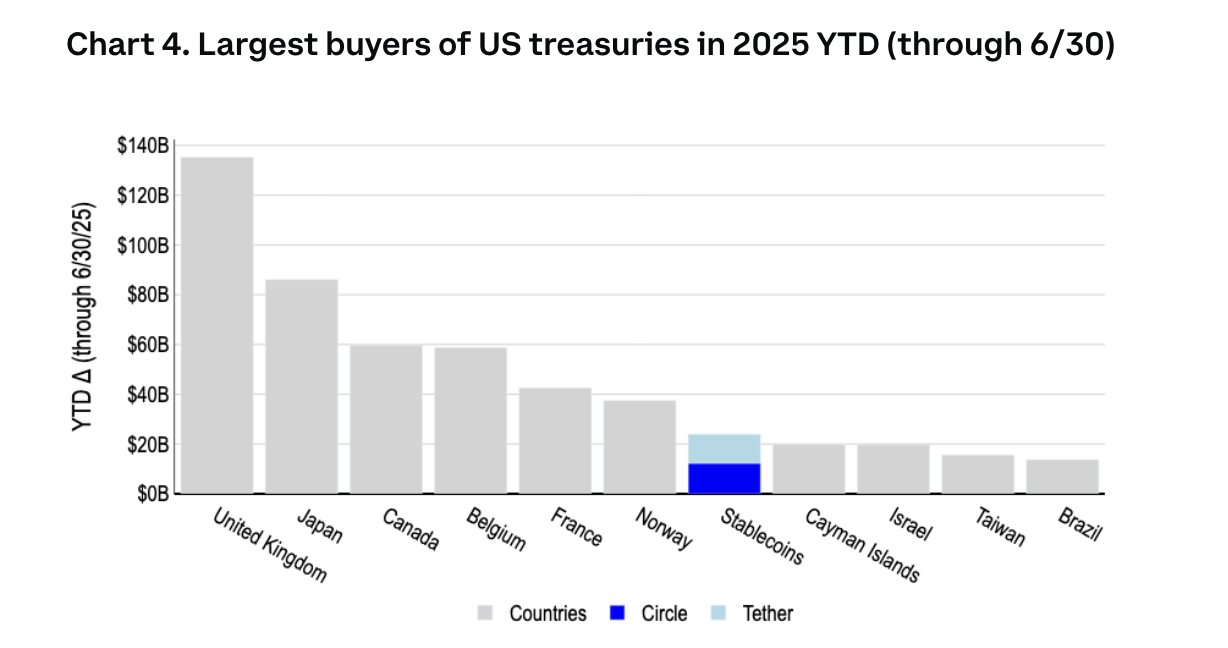
Private stablecoin issuers like Tether and Circle have become top buyers of US government debt, eclipsing countries like South Korea, the United Arab Emirates (UAE), and Germany.
Dollar-denominated stablecoins have dominated the market thus far, but other countries are now exploring stablecoins as a supplement to their traditional fiat currencies.
South Korea’s Financial Services Commission (FSC), a government regulator, announced that a comprehensive stablecoin regulatory bill will be submitted to the legislature for consideration in October.
The government of China, which has a long history of opposing cryptocurrencies and privately issued money, reportedly signaled that it may allow yuan-backed stablecoins to circulate in the market.
Analysts and industry executives say that any rollout of a yuan stablecoin would likely be limited to special economic zones in China, like Hong Kong, and international currency markets.
Magazine: Stablecoins in Japan and China, India mulls crypto tax changes: Asia Express