Bitcoin is once again caught in the crossfire of a high-stakes geopolitical standoff. This time, the knock-on effects are being felt across every corner of the crypto market. The script is familiar: The return of U.S.–China trade tensions has triggered a sharp correction in Bitcoin, echoing a pattern seen earlier this year. When escalating tariffs sent risk assets spiraling for weeks on end, BTC corrected by 30%.
U.S.-China trade tensions: another macro shock, another Bitcoin slide
An ‘Uptober’ that began in traditional style with a Bitcoin rally of nearly 18% quickly soured after President Trump announced fresh 100% tariffs on Chinese imports and sweeping export controls on critical software.
The reaction was swift. Bitcoin tumbled over 13% from its highs above $126,000, briefly plunging to the low $107,000s as more than $19 billion in leveraged positions were wiped out in a matter of days, over $9.4 billion of that in just 24 hours.
Trade headlines bled into crypto, and a sense of déjà vu swept through the market. Echoes of the March–May correction, when a similar geopolitical flare-up triggered a 30% drawdown that stretched on for nearly three months, were impossible to ignore.
Liquidity stress and contagion
Behind the price action, the mechanics were clear and brutal. As volatility surged, liquidity fragmented across exchanges. Altcoin markets dislocated, amplifying the selloff. The collapse of the USDE stablecoin and a cascade of liquidations revealed just how entwined crypto liquidity now is with global macro risk and headline shocks from Washington and Beijing.
Even with the Fed sparking risk-on sentiment with dovish talk, the speed and violence of the deleveraging exposed a structural vulnerability. Crypto is a high-beta liquidity asset, and when systemic risk spikes, it gets punished.
Structural resilience beneath the turmoil
Yet beneath the volatility, the industry isn’t throwing in the towel. Institutional portfolios may have trimmed risk, but Bitcoin’s status as a macro hedge appears intact. Over 172 public companies now hold Bitcoin in their treasuries. And even as ETF outflows ticked up, retail buyers poured more than $1.1 billion into spot markets during the drawdown.
That said, headwinds will likely persist, ecoinometrics notes that previous drawdowns of this flavor didn’t resolve until risk appetite returned nearly three months later.
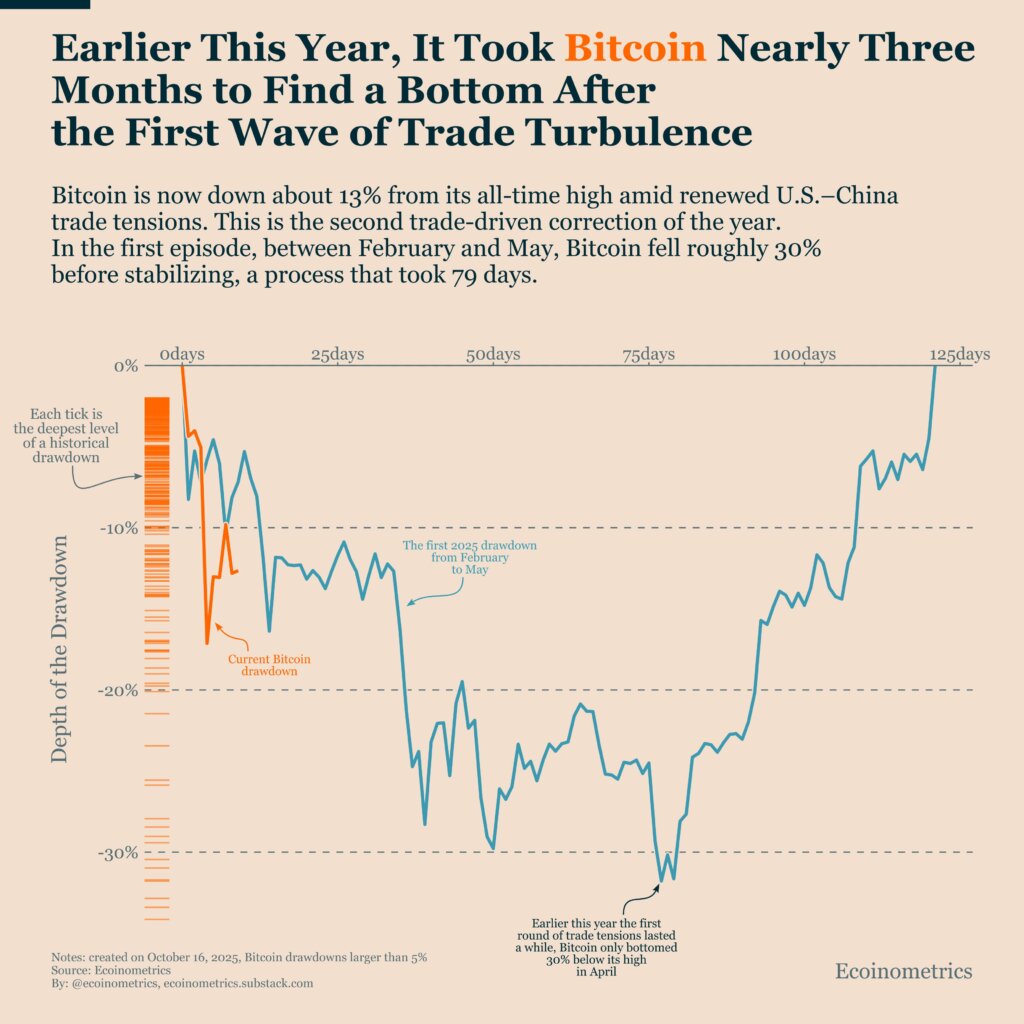
With Bitcoin now struggling to defend support above $107,000 and October morphing into a battle of attrition, all eyes remain on U.S.-China trade tensions. If the March–May playbook repeats itself, macro-induced turbulence could persist into November before Bitcoin’s secular trend resumes.
For now, volatility is a feature, not a bug, and if history is any guide, recovery in crypto will come not from prediction, but from the gradual return of risk appetite and liquidity.