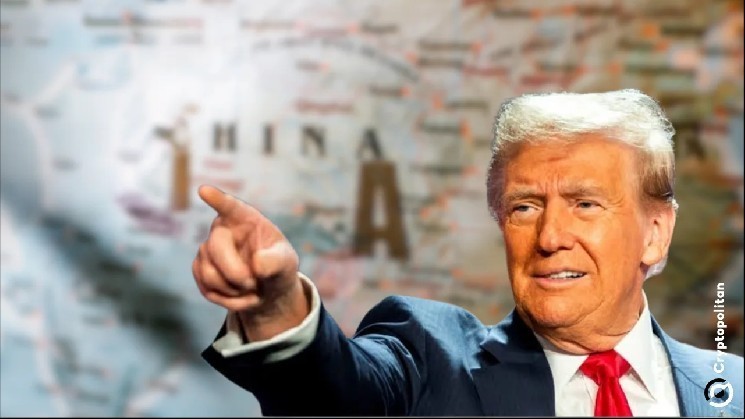
Trade tensions rise as US President Donald Trump threatens new tariffs on Southeast Asian countries.
Analysts have warned that this could erect a “tariff wall” that disrupts regional supply chains and raises prices for American consumers.
Trump’s new threats come as an August 1st deadline for trade deals approaches. He said he planned to impose new tariffs, from 25% to 40%, on countries including Cambodia, Indonesia, Laos, Malaysia, and Thailand. These countries have become primary port calls for a shuffle of Chinese goods redirected to skirt current US tariffs.
Vietnam, the largest in this chain of trans-shipping, receives a 20% tariff on the goods it exports to the US and gets hit with 40% on the re-routed goods. Trump says the tariffs will generate more than $300 billion by the end of the year, beginning with what he called “big money” starting to come in from August.
Tariffs reshape global supply chains
While Trump’s attitude may strike a chord with those inclined toward protectionism, warning bells are being sounded by economists and trade experts. They warn that creating a “tariff wall” around Southeast Asia would cause major disruptions in global supply chains and raise costs for consumers and businesses in the United States.
There’s still room for countries like Malaysia, Cambodia, and Thailand to haggle for better terms on the way to the negotiations with Washington, said Alicia García Herrero, the chief Asia Pacific economist at Natixis. She said the tariff deal struck with Vietnam should not become a template for the region.
Regardless of the final tariff levels agreed upon, prices for goods exported from Southeast Asia are expected to rise under Trump’s plan. The region remains a major manufacturing hub for US consumer products, making it likely that cost increases will ripple through American markets.
“Manufacturing will get more expensive in Asia generally, but in principle the 20% ‘tariff wall’ might be different across countries where inputs from China are smaller. I don’t think it has to be the same,” she said.
Mark Williams, chief Asia economist at Capital Economics, warned that enforcing the proposed tariffs could be inconsistent and unpredictable. With different rates potentially applied across countries and industries, he said the lack of clarity may lead to confusion and inefficiencies throughout global trade networks.
Williams also added that tariffs on Southeast Asian countries could have unintended consequences. He said that many companies had moved operations from China to countries like Vietnam and Indonesia during the first term of Trump’s presidency to escape the existing tariffs. But he warned that the erection of a new tariff wall could hamper this trend. If the difference between tariffs on China and those in other countries nearby became smaller, he said, the motivation for businesses to move would wane, possibly stalling the momentum of supply chain diversification.
Rising costs squeeze shoppers under new tariff rules
Even steep tariffs are unlikely to achieve Trump’s goal of returning manufacturing to the US. American industries often lack the scale and cost advantages needed to replace Asian production.
According to Williams, US companies and consumers would face a dilemma: either absorb higher costs for imported goods or go without them. He noted that domestic production remains uncompetitive in many sectors, even with tariffs.
This raises the risk of inflation for American consumers. Since tariffs are essentially taxes on imports, their costs typically fall on consumers. And because global supply chains are deeply intertwined, even minor policy shifts can trigger widespread ripple effects.
At the same time, tougher rules on “trans-shipped” goods—those routed through third countries—could lead to stricter scrutiny once products reach US ports. This, in turn, could pave the way for new industries focused on compliance and processing to emerge.