Global financial markets are once again facing rising geopolitical uncertainty. Oil prices are climbing as tensions escalate across key energy regions, while governments and energy companies move quickly to protect critical infrastructure.
A new development illustrates how rapidly the global energy landscape is evolving. The world’s largest oil producer, Saudi Aramco, is reportedly in talks with Ukrainian firms to purchase specialized interceptor drones designed to defend oil facilities from potential Iranian drone attacks.
At the same time, President Donald Trump has stated that rising oil prices could benefit the United States because the country has become one of the world’s largest oil producers.
Together, these developments highlight how energy security is becoming a central issue for global markets — and why crypto investors are paying attention.
Oil Infrastructure Is Becoming a Strategic Target
Energy facilities have increasingly become targets during geopolitical conflicts. Drone attacks on refineries, pipelines, and export terminals can disrupt global oil supply within hours.
For companies like Saudi Aramco, protecting infrastructure is therefore a top priority.
Ukraine has developed sophisticated drone defense systems during the Russia–Ukraine War, including interceptor drones capable of stopping incoming unmanned aerial vehicles before they reach critical targets.
Reports indicate Saudi Aramco is now exploring these technologies to strengthen its defenses against potential attacks.
This reflects a broader shift in modern warfare, where relatively inexpensive drones can threaten infrastructure worth billions of dollars.
Oil Prices React to Rising Risk
Energy markets are extremely sensitive to geopolitical tensions. Even the threat of disruption to major producers can push oil prices sharply higher.
Recent headlines have already contributed to volatility in financial markets, with billions of dollars wiped from global stock valuations as investors reacted to rising geopolitical risk and oil prices moving higher.
One of the most sensitive energy chokepoints remains the Strait of Hormuz, through which roughly 20% of global oil exports pass.
Any disruption to shipping in this region could trigger major price spikes and ripple effects across global markets.
Trump Highlights the U.S. Energy Advantage
President Donald Trump has also weighed in on the situation, noting that the United States benefits from high oil prices due to its status as a major producer.
Over the past decade, the U.S. has dramatically increased production through shale extraction, transforming the country into one of the world’s largest oil suppliers.
If geopolitical tensions push oil prices higher, American energy exports could play an increasingly important role in stabilizing global markets.
However, higher oil prices can also contribute to inflation and market volatility.
Why Crypto Investors Are Watching Oil
For cryptocurrency markets, developments in energy markets often serve as early signals of macroeconomic changes.
When oil prices surge, several effects tend to follow:
- Inflation expectations increase
- Central banks may delay interest rate cuts
- Global financial markets become more volatile
These conditions can initially pressure risk assets such as cryptocurrencies.
At the same time, prolonged geopolitical instability can strengthen Bitcoin’s narrative as a hedge against global uncertainty.
As traditional markets react to geopolitical shocks, some investors begin exploring alternative stores of value.
Is Bitcoin Becoming a Crisis Hedge?
The idea of Bitcoin acting as “digital gold” has been debated for years. During periods of geopolitical instability, this narrative often returns.
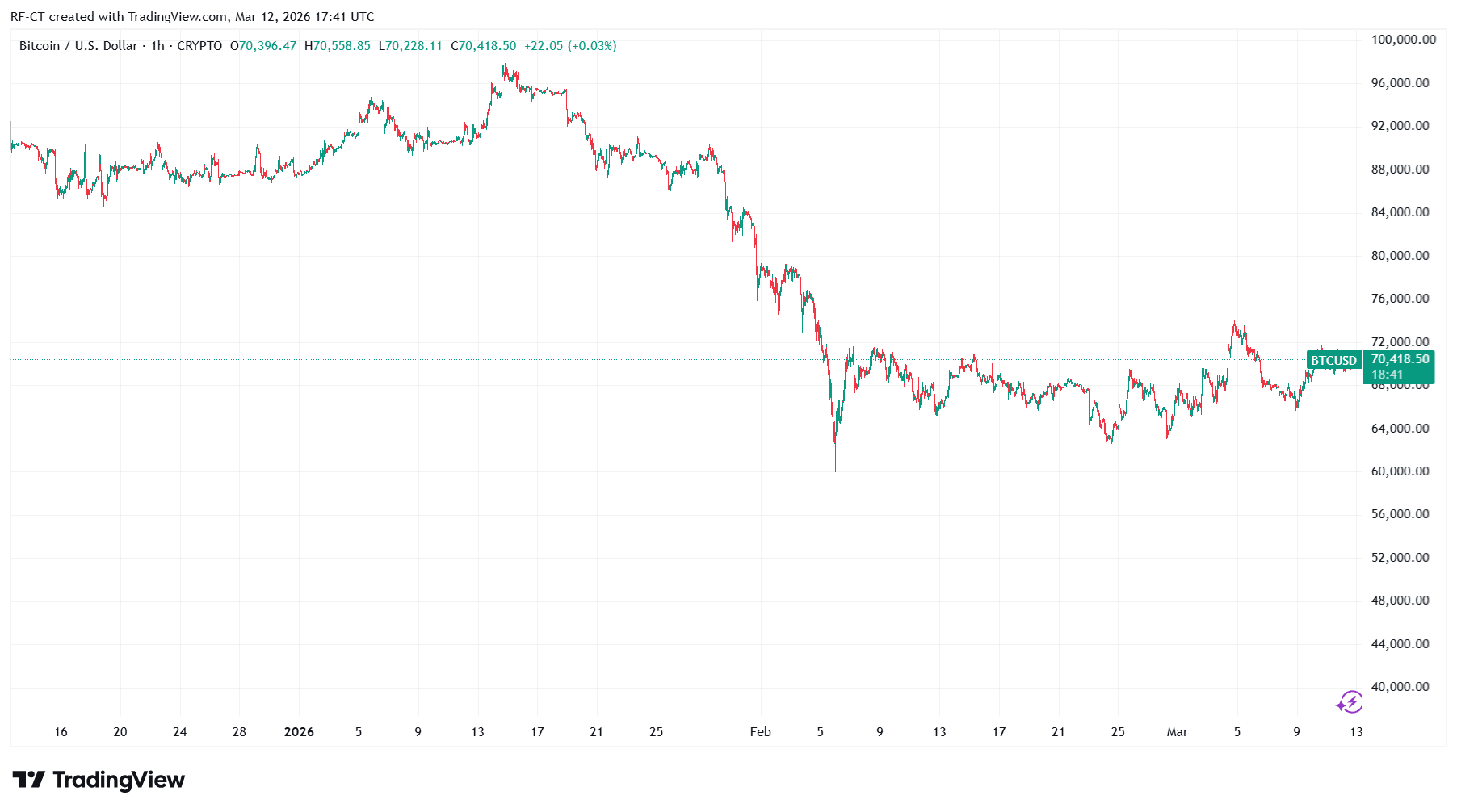
Rising oil prices, drone threats to critical infrastructure, and shifting energy alliances are once again forcing investors to reconsider how global crises affect financial markets.
Whether Bitcoin ultimately behaves like a risk asset or a crisis hedge will depend largely on liquidity conditions and investor sentiment.
What is clear, however, is that geopolitical developments in energy markets are increasingly influencing the cryptocurrency landscape.