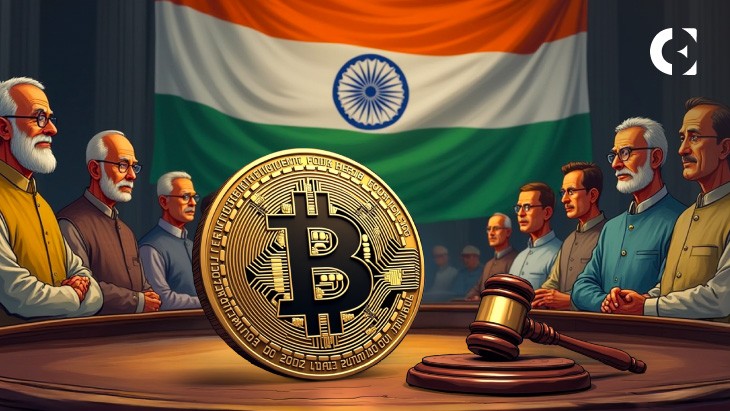
India has slipped to sixth place in global GDP rankings, triggering discussion. The change comes from the latest IMF World Economic Outlook update released in April 2026. Experts say the shift reflects currency movements and statistical revisions rather than a sharp economic slowdown.
Financial expert Neil Borate pointed out the change in a Reddit post. He said, “India is now the 6th largest economy in the world by nominal GDP (current USD). We’ve been overtaken by the UK.” He added that the underlying economy is still growing, but the ranking has changed due to a weaker rupee and a revised GDP base year.
Despite the downgrade in ranking, real economic activity remains steady, according to analyst Corpus-Finder, who commented just below the post.
Currency Pressure and Market Sentiment
The rupee’s weakness has directly reduced India’s GDP when measured in US dollars. At the same time, a revision of the GDP base year improved data accuracy but brought down nominal figures.
Nevertheless, real GDP is still performing strongly at 7.6%, while nominal GDP has declined by about 3.3%. It follows that investor confidence has weakened, although growth is stable within the country.
Foreign portfolio investors have not been immune to these developments either. They have divested more than $45 billion in stocks since October 2024. Sectors like information technology and banking have recorded only modest earnings gains during the same period.
Crypto as a Currency Hedge
Cryptocurrency markets may behave differently from other economic dynamics. For example, bitcoin and ether are denominated in US dollars, so exchange rate fluctuations play a crucial role in the market.
If the rupee loses its value, then the exchange value of cryptocurrencies will increase after conversion. Thus, some Indians consider cryptocurrency trading to hedge against exchange rate fluctuations.
Trading volumes have increased over the past two years. Activity recovered through 2024 and 2025 despite new tax rules on cryptocurrencies. At the same time, some investors shifted toward crypto as stock market returns slowed. However, the market remains highly speculative and carries significant risk.
Inflation, Policy Cool Crypto Risk Mood
Higher inflation can reduce how much money people have left to invest in speculative assets. At the same time, tighter monetary policy can make investors less willing to take risks.
Policymakers continue to monitor the crypto sector without making any major tax changes. Ravi Agrawal said, “Every day the profile of (cryptocurrency) transactions is changing. We need to understand new types and patterns of transactions as the technology evolves.”
Related: U.S.–Iran Ceasefire Progress Lifts Global Sentiment As Bitcoin Slips Below $74K