For decades, SWIFT has served as the messaging backbone of global banking, connecting more than 11,000 financial institutions.
Now, SWIFT is moving into tokenization. Its goal is to connect digital assets, tokenized securities, and bank money through one interoperable framework.
If successful, this initiative could help bring trillions of dollars in stocks, bonds, and other real-world assets onto blockchain rails.
From Messaging Giant to Tokenization Connector
Founded in 1973, SWIFT does not move money itself. Instead, it provides the secure messaging system banks use to send payment instructions across borders.
Its greatest strength has always been interoperability. Banks worldwide can communicate using the same trusted standards.
That advantage is becoming increasingly important as tokenized assets emerge across multiple blockchains, each with different protocols.
SWIFT’s solution is to connect banks, blockchains, and tokenized assets through a common interoperability layer.
SWIFT’s Tokenization Strategy
SWIFT is not building its own blockchain.
Instead, it is extending its existing messaging infrastructure to connect institutions with multiple blockchain networks.
In 2022, SWIFT began working with Chainlink, Citigroup, and BNY to test tokenized asset transfers across different chains.
The pilots showed that one SWIFT instruction could trigger transfers across both blockchain and traditional banking systems.
Since then, the organization has expanded testing to settlement, collateral movement, and corporate actions involving tokenized assets.
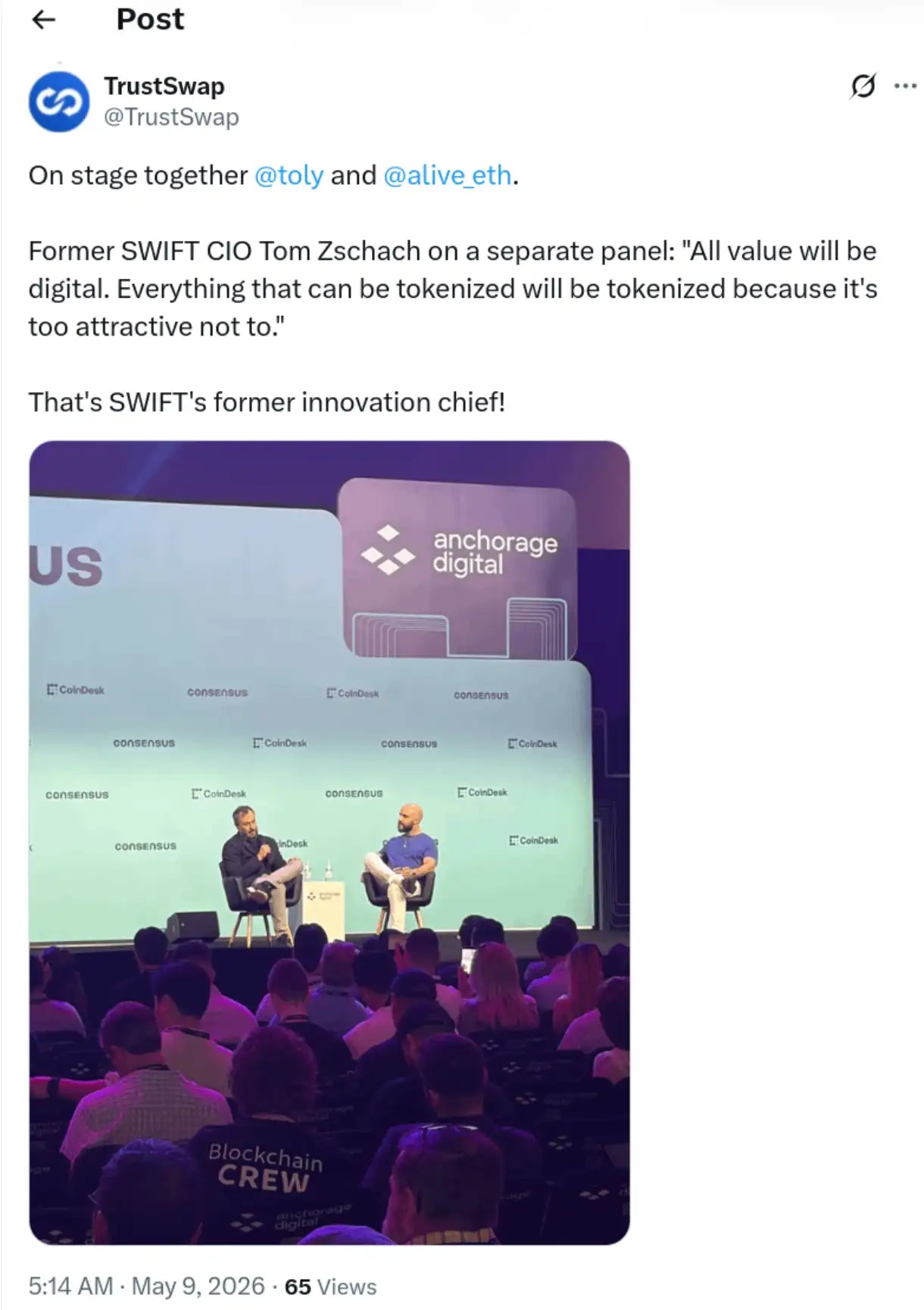
Built to Connect Any Blockchain
SWIFT is blockchain-agnostic. It is not tied to a specific network such as Ethereum or Solana.
By working with Chainlink, SWIFT enables banks to interact with multiple blockchains through a single interface.
In effect, SWIFT is positioning itself as the universal translator between traditional finance and on-chain markets.
What This Means for Investors
SWIFT’s move is a strong signal that tokenization is entering mainstream finance.
If stocks, bonds, and funds become tokenized and connected through SWIFT, capital could move faster across markets and time zones.
This could improve liquidity, reduce settlement delays, lower costs, and broaden investor access.
For crypto investors, institutional adoption may strengthen demand for platforms focused on interoperability and secure settlement.
Key Takeaway
SWIFT is using its global banking network to connect traditional finance with tokenized assets.
If successful, this interoperability layer could accelerate the migration of real-world assets onto blockchain infrastructure and create new opportunities for institutional and crypto investors.
Disclaimer:
This article is for informational purposes only and does not constitute financial, investment, or trading advice. The views expressed are based on publicly available data, market observations, and the author’s interpretation at the time of writing. Cryptocurrency markets are highly volatile and unpredictable, and past performance or current technical setups do not guarantee future results. Readers should conduct their own research and consult with a qualified financial advisor before making any investment decisions. TechGaged does not accept liability for any losses incurred based on the information presented.