One of the most significant macroeconomic weeks of the month is approaching for both Bitcoin and the larger cryptocurrency market, with multiple U.S. economic reports that can cause risk-related asset volatility. The Federal Reserve’s preferred inflation measure, Personal Consumption Expenditures (PCE) inflation data for April, will be released on Thursday, making it the biggest event.
Volatility is the main issue
However, the market setup is not limited to PCE. This week includes U.S. consumer confidence data on Tuesday, followed on Thursday by Q1 2026 GDP and April new home sales figures. Due to Memorial Day, Monday is comparatively quiet. As a result, liquidity may remain lower than usual early in the week before volatility increases dramatically around Thursday’s releases.
PCE serves as the primary catalyst for cryptocurrency traders. If inflation turns out to be higher than anticipated, markets might begin pricing in a more aggressive Federal Reserve position once more. As a result, speculative assets like Bitcoin and altcoins would probably be under pressure, and Treasury yields would probably rise.
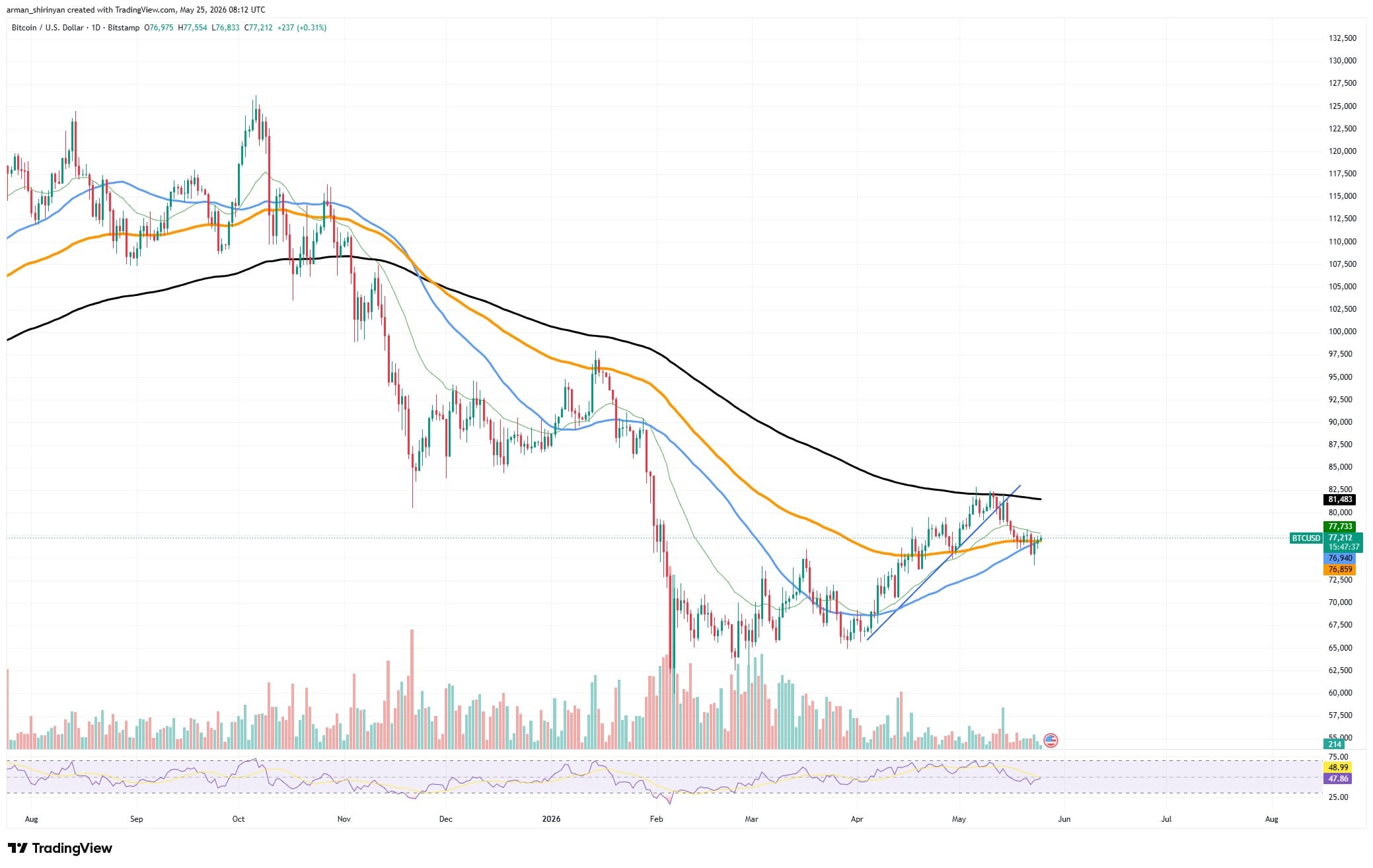
In that case, after failing to maintain recent breakout momentum above $80,000, traders may witness Bitcoin retest support zones in the $75,000-$76,000 range. The chart already indicates hesitancy. Recently, Bitcoin lost the short-term ascending structure that sustained the recovery through April and May after rejecting resistance close to the 200-day moving average at $81,000.
Additionally, momentum indicators decreased significantly, with the RSI returning to neutral territory rather than maintaining a bullish trajectory. As a result, $BTC is susceptible to pressure from macro-driven sellers.
Ambitions are higher
However, lower-than-anticipated inflation data could swiftly rekindle interest in taking risks. Expectations for a potential Federal Reserve easing later in the year, which has historically supported both stocks and cryptocurrencies, would be strengthened by lower inflation. In that case, Bitcoin might reclaim the resistance range of $80,000 to $82,000 and reopen the route to more ambitious recovery goals.
Altcoins would probably respond even more forcefully. During periods of macro volatility, Bitcoin’s directional movement is often amplified by Ethereum, Solana, and other higher-beta assets. Sharp short squeezes across altcoins that have recently underperformed Bitcoin could be caused by a bullish inflation surprise. However, speculative sectors may be more severely impacted by a negative inflation report, particularly meme coins and low-liquidity assets that are already having technical difficulties.
GDP statistics also matter. A Goldilocks narrative for cryptocurrency could be created by weak GDP and declining inflation, which would support rate-cut expectations without immediately rekindling inflation concerns. Strong growth and sticky inflation, however, would likely support higher-for-longer rate expectations, which have historically presented challenges for digital assets.
Bitcoin is currently right in the middle of rejection and recovery. The outcome of Thursday’s macro data could determine the winner.