Bitcoin ETF outflows exceeded $4.01 billion since the 7th of May, highlighting a sharp shift in institutional sentiment as demand weakened.
Historically, strong ETF inflows accompanied optimistic market conditions, while extended outflow periods reflected declining investor confidence.
This trend emerged as Bitcoin continued trading below major resistance levels and struggled to attract fresh institutional demand.
However, the scale of the withdrawals stood out because previous periods of heavy ETF selling often aligned with broader market weakness.
Although ETF investors reduced exposure aggressively, the data also suggested that institutional sentiment had become increasingly cautious rather than outright panic-driven, leaving room for a potential shift if broader conditions improved.
Buyers keep stepping in underneath
Despite the growing ETF-related selling pressure, Spot market participants continued showing resilience.
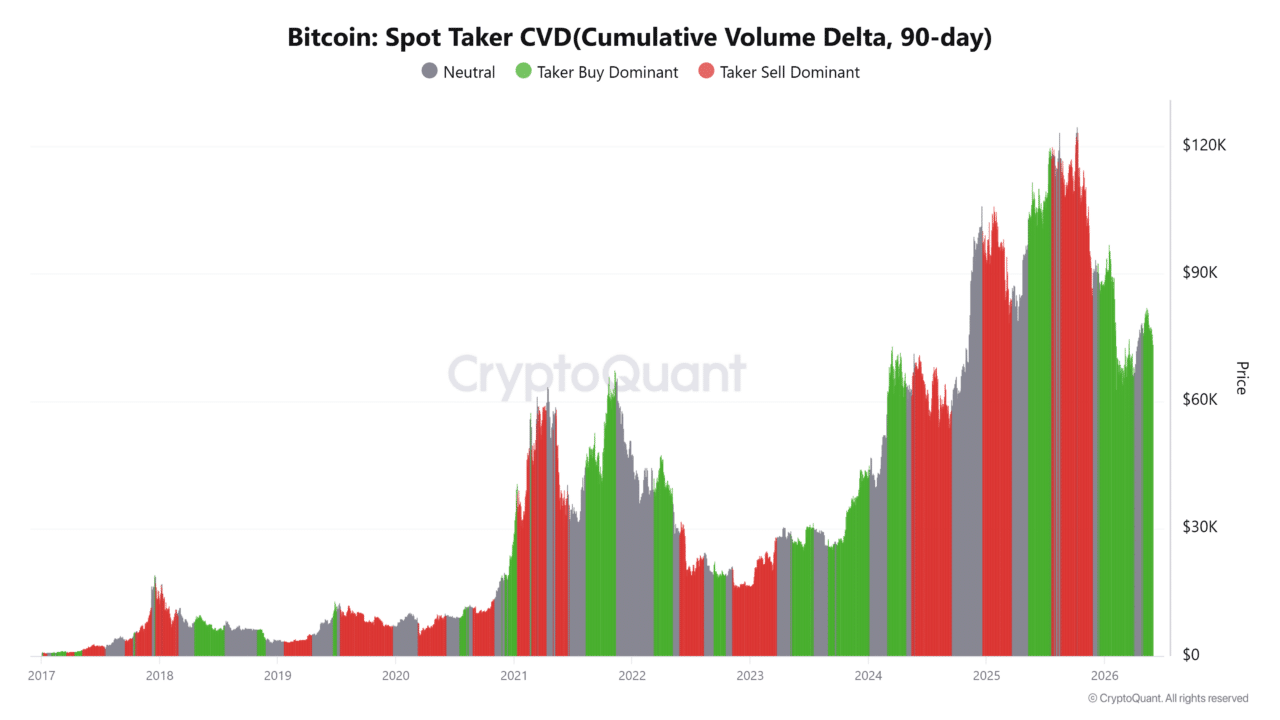
The 90-day Spot Taker CVD remained in a “Taker Buy Dominant” state, indicating that aggressive buyers still absorbed available supply.
This divergence created an interesting market dynamic because institutional capital moved out while Spot traders continued accumulating.
Such behavior often reflected confidence among shorter-term participants who viewed lower prices as opportunities rather than risks.
Furthermore, the continued presence of taker buyers suggested that selling pressure had not completely overwhelmed demand.
Will $73K support spark a recovery for $BTC?
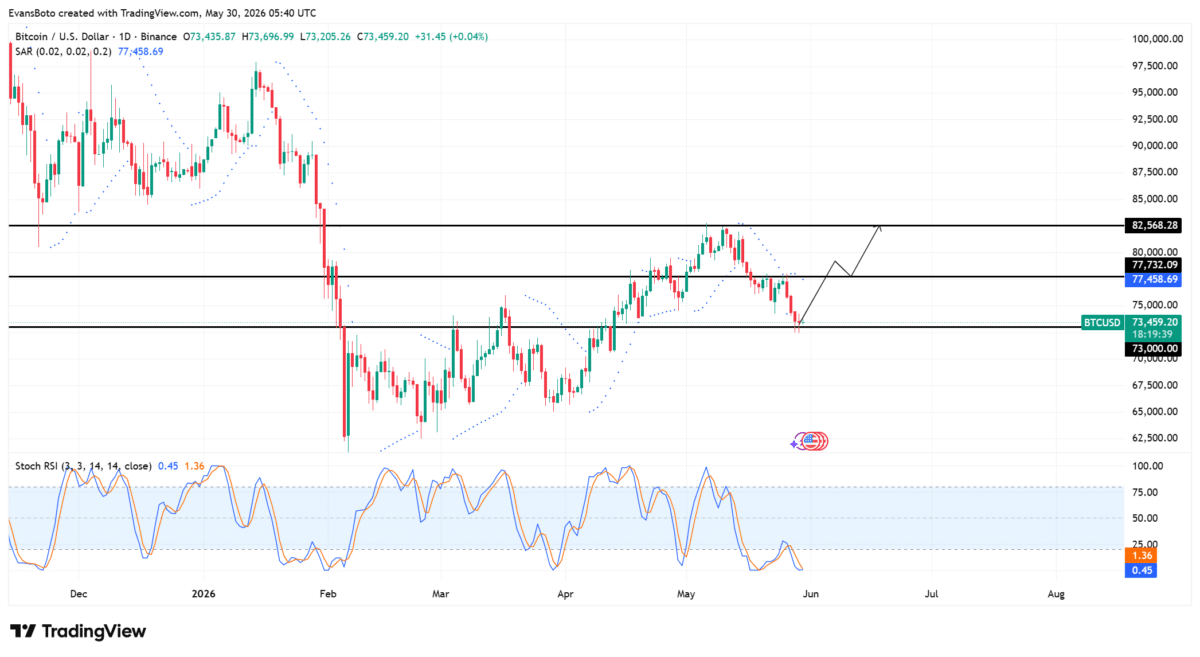
At the time of press, Bitcoin [$BTC] traded near $73,459 after revisiting the crucial $73,000 support zone, which remained the first major line of defense for buyers.
Recent price action showed sellers pushing $BTC lower from the $81K region, bringing the asset back toward a key demand area. However, the chart also highlighted resistance at $77,732, followed by a stronger barrier near $82,568.
Technical indicators reflected growing downside exhaustion. The Stoch RSI dropped to 0.45 and 1.36, placing both readings deep in oversold territory after the recent decline.
Such conditions often appeared before relief rallies emerged.
Nevertheless, the Parabolic SAR continued printing above price, indicating that bearish control remained intact.
If buyers defend $73K successfully, Bitcoin could attempt a recovery toward $77.7K. Otherwise, a breakdown would likely expose lower support levels and delay any meaningful rebound.
Bitcoin NVT rise raises fresh concerns
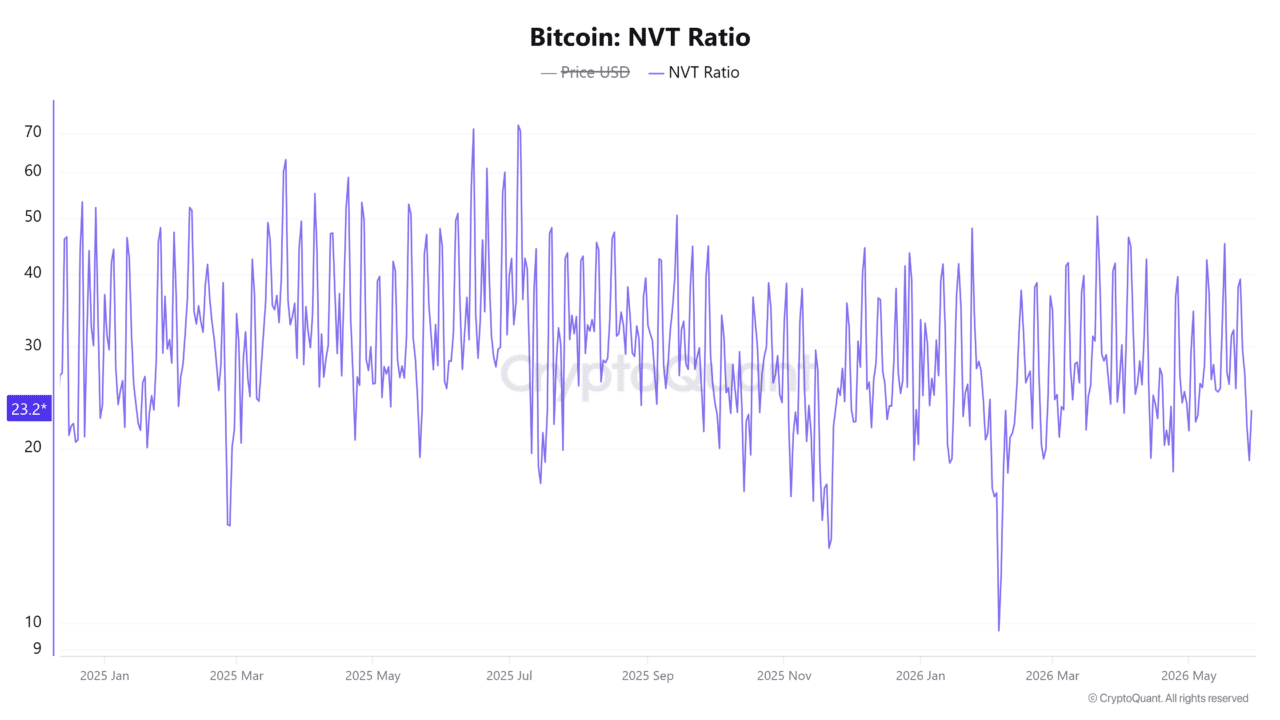
On-chain data revealed another area worth monitoring. Bitcoin’s NVT Ratio climbed 21.81% to 23.24, indicating that market value increased relative to transaction activity.
Rising NVT readings often suggested that network usage failed to keep pace with valuation growth. In this case, the increase arrived alongside weakening ETF demand, creating another signal that investor enthusiasm had cooled.
Nevertheless, the ratio remained far below levels typically associated with extreme overheating. The recent rise, therefore, pointed more toward slowing network efficiency than outright overvaluation.
Combined with the ETF outflows, the NVT trend reinforced the view that Bitcoin’s recovery still lacked broad participation. Stronger transaction activity would likely improve the outlook and support a more sustainable rebound.
To conclude, Bitcoin faced growing pressure as ETF outflows exceeded $4 billion and the NVT Ratio climbed sharply.
However, Spot takers continued buying aggressively while the Stoch RSI reached deeply oversold levels. These signals suggested that selling pressure had intensified, yet demand had not disappeared.
Final Summary
- Bitcoin ETF withdrawals exceeded $4B while institutional sentiment continued weakening.
- Spot buyers remained active despite bearish pressure surrounding the $73K zone.