
- Major crypto exchanges like OKX, Kraken and Hyperliquid are rapidly adding perpetual futures and tokenized markets for stocks, commodities and index funds to keep traders and capital on their platforms.
- Executives say this shift reflects a broader convergence between crypto and traditional finance, as users seek 24/7 access to a wider range of assets and tokenized real-world assets surge in value.
- The expansion into synthetic and tokenized equities brings significant regulatory, settlement and liquidity risks, making long-term success dependent on strong compliance, security and investor protections.
A significant transformation is currently underway across the established cryptocurrency market. The top crypto exchanges are morphing into multi-asset financial platforms, breaking down the traditional barriers that once kept crypto and Wall Street completely apart.
Crypto exchange OKX rolled out 13 new “X-Perp” markets for European traders on Tuesday, giving retail users direct access to “Magnificent 7” tech stock futures, alongside major commodity indices like gold, silver, and crude oil. The platform also added perpetual markets for major index funds like the SPY and QQQ, enabling users to trade exposure to the largest U.S. equities outside standard market hours.
Exchanges like OKX are deliberately expanding their services to stop cash from leaving their platforms, while catering to everyday traders who now want to bet on more than just crypto.
Kraken, for example, rolled out 24-hour perpetual futures for synthetic U.S. stock tokens, offering non-U.S. retail traders up to 20x leverage on equities outside standard Wall Street operating hours. Onchain perpetual platform Hyperliquid also moved aggressively into TradFi, putting Wall Street on alert.
Retaining trader fees
Centralized exchange trading volumes recently dropped more than 11% to $4.61 trillion, hitting their lowest performance level since late 2024, according to CoinDesk Data’s April 2026 market reviews. “Retail participation across crypto has moderated, but the demand for trading has not disappeared,” said Behrin Naidoo, founder of Neutral DeFi Protocol. Naidoo, an alumnus of London Business School who previously managed global market strategies and fintech investments at J.P. Morgan, PwC, and RMH, told CoinDesk that the problem isn’t a lack of interest, but rather an infrastructure gap.
“Once assets like gold, oil, and equities became accessible through crypto infrastructure, they became more attractive than many crypto assets themselves.”
By putting stocks and commodities under one login, platforms ensure that when a trader pulls their cash out of bitcoin during a slump, that money stays locked inside the app as stablecoins rather than walking out the door to an old-school stock brokerage.
Convergence over capital flight
Crypto company executives argue that this is not a defensive move driven by fear of Wall Street. Instead, they view it as a natural convergence of two distinct financial systems.
“Money is not leaving crypto; if anything, it’s brewing,” said Gracy Chen, CEO of Bitget. Chen suggests that the recent market pullbacks were expected, particularly with major technology initial public offerings taking center stage. “Tokenized stocks and assets are the best product-market fit. With it, users are not limited to stock market hours and still retain economic rights, such as dividends. This has changed the old Wall Street rules completely.”
This traffic goes both ways. While crypto apps are listing stocks, Wall Street is moving cash onto blockchain networks, such as tokenized U.S. Treasurys backed by firms like BlackRock and Franklin Templeton. That niche exploded from $750 million in early 2024 to $15.3 billion by May 2026. But banks across the U.S. and around the world are increasingly expanding their crypto services to clients as they, too, seek to remain competitive.

-
1
Crypto’s next billion-dollar hacker may move at superhuman speed19 hours ago
-
2
Here’s what SpaceX’s IPO means for its $1.3 billion bitcoin reserve20 hours ago
-
3
Stablecoins Were Meant to Disrupt Finance. Instead, They Became Idle Cash.20 hours ago
-
4
Bitcoin rises above $64,000 after Pakistan prime minister says Iran peace deal is near20 hours ago
-
5
Wall Street is moving past crypto pilots and deeper into Ethereum, says Etherealize founder21 hours ago
-
6
Tokenization mirrors the $20 trillion ETF boom as blockchain and AI converge, Ondo exec says21 hours ago
-
7
Perpetual futures could become crypto’s next ETF moment23 hours ago
-
8
Saylor to Musk: Thanks to you, 25% of ‘Mag8’ firms now hold bitcoin23 hours ago
-
9
Crypto should adopt the best of centralization, says LMAX CEOJun 13, 2026
-
10
Ripple wants AI agents to pay in XRP and RLUSD. The market is still mostly USDCJun 13, 2026


io.net’s IDE ties token burns to real GPU demand, replacing fixed emissions with a demand-linked model – live as of 11 June 2026.
io.net’s IDE ties token burns to real GPU demand, replacing fixed emissions with a demand-linked model – live as of 11 June 2026.
Why it matters:
io.net’s IDE ties token burns to real GPU demand, replacing fixed emissions with a demand-linked model – live as of 11 June 2026.
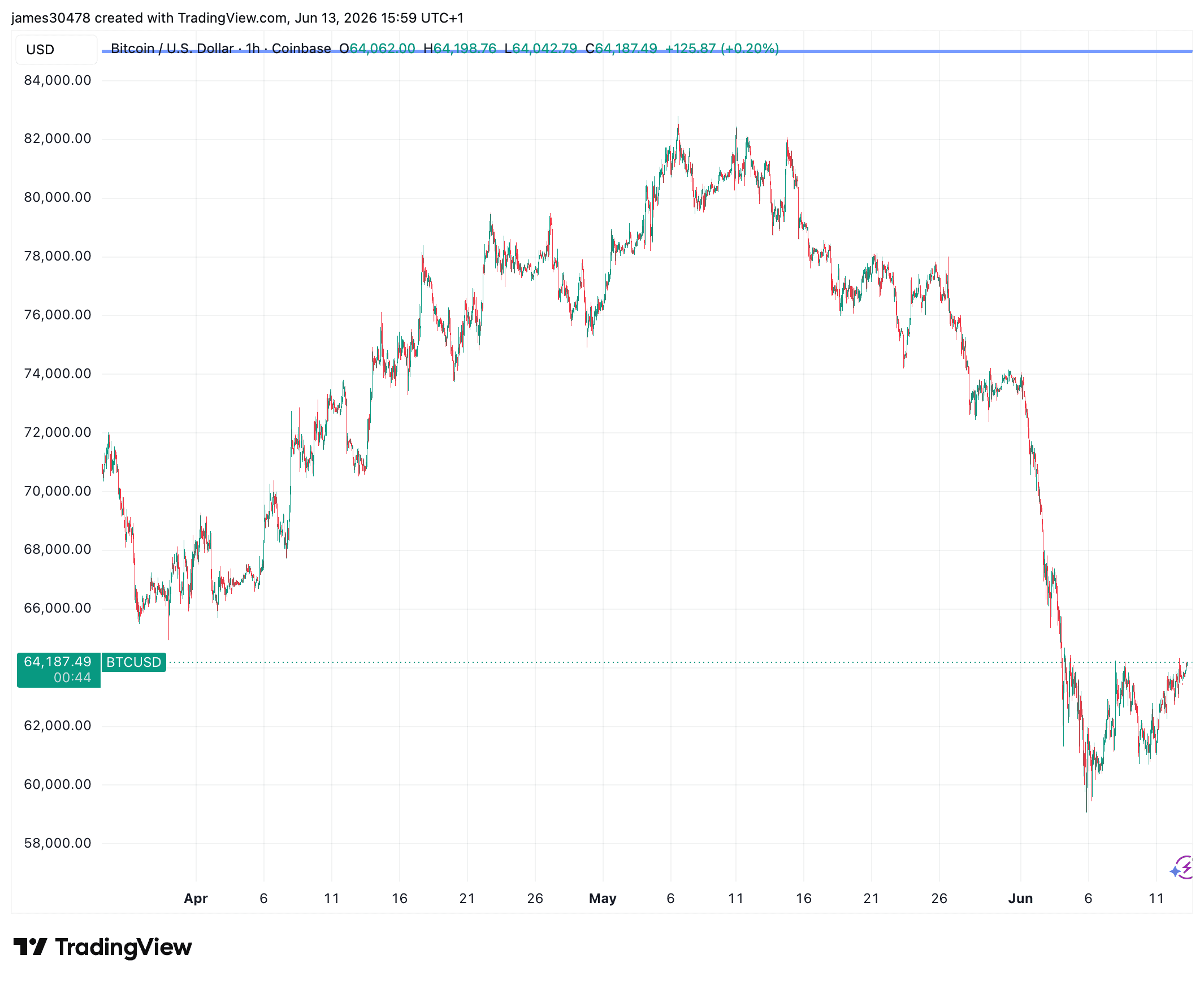 Bitcoin rises above $64,000 after Pakistan prime minister says Iran peace deal is near
 Saylor to Musk: Thanks to you, 25% of ‘Mag8’ firms now hold bitcoin
 Anthropic’s pre-IPO shares fall as U.S. government shuts down its most powerful AI model