
Regulated Bitcoin (BTC) investment banks are coming to El Salvador, following Thursday’s approval of El Salvador’s Investment Banking Law, which classifies investment banks under different regulations than commercial banks.
Investment banks will now be allowed to hold BTC and other digital assets on their balance sheets and offer crypto services to “sophisticated” investors, the equivalent of accredited investors in the United States, Juan Carlos Reyes, president of El Salvador’s Commission of Digital Assets (CNAD), the government’s crypto regulatory agency, told Cointelegraph. He added:
“The new Investment Banking Law allows private investment banks to operate in legal tender and foreign currencies for ‘Sophisticated Investors’ and to engage in digital assets like Bitcoin with a Digital Asset Service Provider (PSAD) license. With a PSAD license, a bank could choose to operate entirely as a Bitcoin bank.”
The law encourages foreign investment in El Salvador and positions it as an emerging hub for finance, proponents of the newly adopted law say.
Institutional investors have been a major driver of El Salvador’s crypto adoption, as the Central American country attracts crypto companies and financial firms with its pro-crypto regulatory climate.
However, critics say that BTC adoption in the country and the regulatory policies are not helping the average person and mainly benefits the government and large businesses.
Related: El Salvador hasn’t bought Bitcoin since signing loan deal, IMF says
El Salvador forges international partnerships to drive crypto growth
President of El Salvador, Nayib Bukele, met with Bilal Bin Saqib, Pakistan’s state minister of crypto and blockchain, to share strategies for nation-state-level Bitcoin adoption and energy policy to foster crypto mining.
“The cooperation is essentially based on how emerging economies that are both under the IMF program can leverage technology and other financial instruments for national growth,” Bin Saqib told Cointelegraph in an interview.
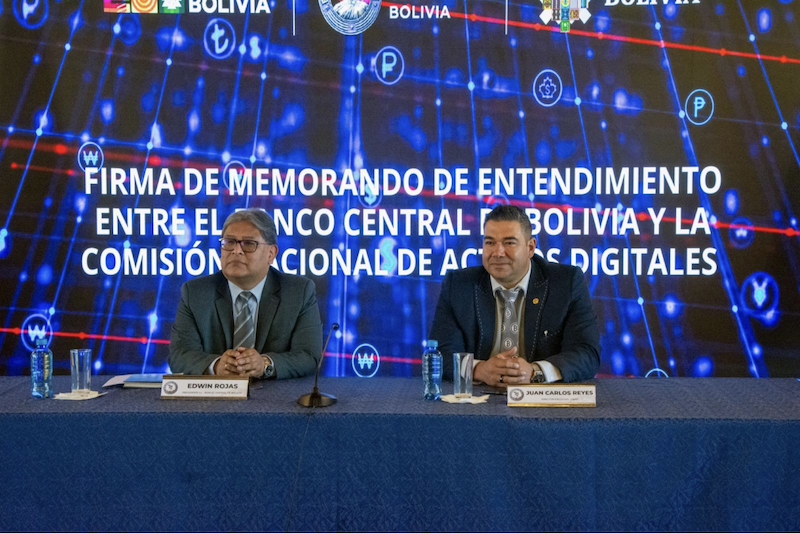
On July 30, Bolivia’s central bank signed a memorandum of understanding with CNAD to promote the use of cryptocurrencies as an alternative to traditional fiat currencies.
The agreement came amid a currency crisis in Bolivia, where US dollars are scarce and difficult to acquire, making international trade difficult.
This has led to the growing use of US-dollar-denominated stablecoins as a medium of exchange, according to Tether CEO Paolo Ardoino.
Magazine: El Salvador’s national Bitcoin chief has been orange-pilling Argentina