Bitcoin [$BTC] has absorbed a run of blows, and although sentiment looks steadier with the asset testing $64,500 again, the market has yet to earn a bullish label.
Traditional investors appear to be circling back, adding $75.76 million in inflows between the 13th and the 17th of July, yet several forces keep the market in a cautious state. Long-term holders remain at the center of that caution.
Bitcoin long-term holders still need watching
Long-term holders are investors who have held their coins for no less than 155 days without moving them, and on-chain data shows this group selling at a loss rather than a profit.
The 7-day moving average of the long-term holder SOPR – the Spent Output Profit Ratio (SOPR), which measures whether coins move at a profit or a loss – sits at 0.94 at press time, below the breakeven mark of 1.
That reading tells us long-term holders have parted with their Bitcoin at roughly a 6% loss so far.
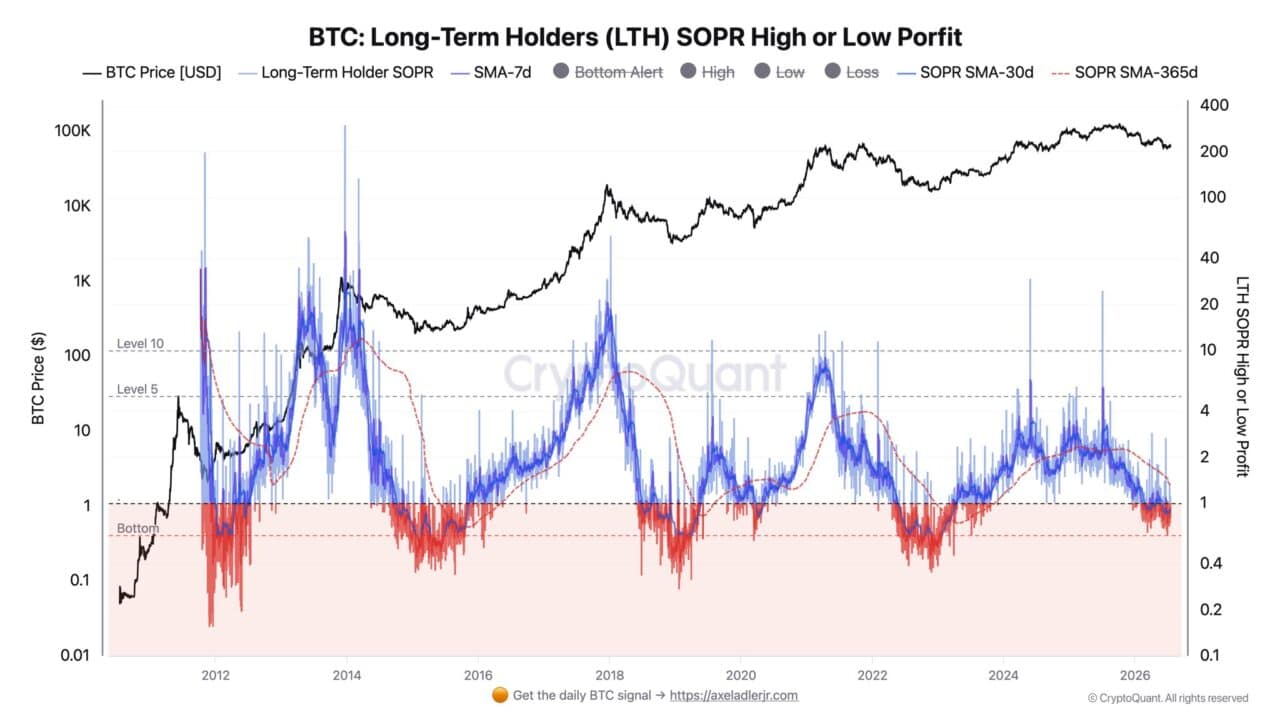
The figure marks a sharp improvement from earlier in the cycle, when the group sold at a 27% loss and the LTH SOPR fell to 0.73.
Less selling does not translate to full conviction, and the improvement does not mean the market has locked in a rebound, so long-term holders remain exposed to further price swings.
The monthly picture reinforces that caution, with the LTH SOPR showing these investors selling at a 12% loss since June.
History still offers a counterweight, as prolonged stretches of loss-taking have often preceded Bitcoin rallies, including the 2020 and 2023 runs to fresh all-time highs after the market exited similar phases.
Exchange CDD points to short-term holder dominance
Exchange Coin Days Destroyed (CDD) weights each moving coin by how long it stayed dormant, which lets analysts see whether long-term or short-term holders drive the coins landing on exchanges, and the metric currently marks short-term, active participants as the dominant force.
An elevated Exchange CDD normally signals that sellers control the market as selling pressure builds, a classic bearish read, yet the opposite is playing out here and points to a more relaxed phase.
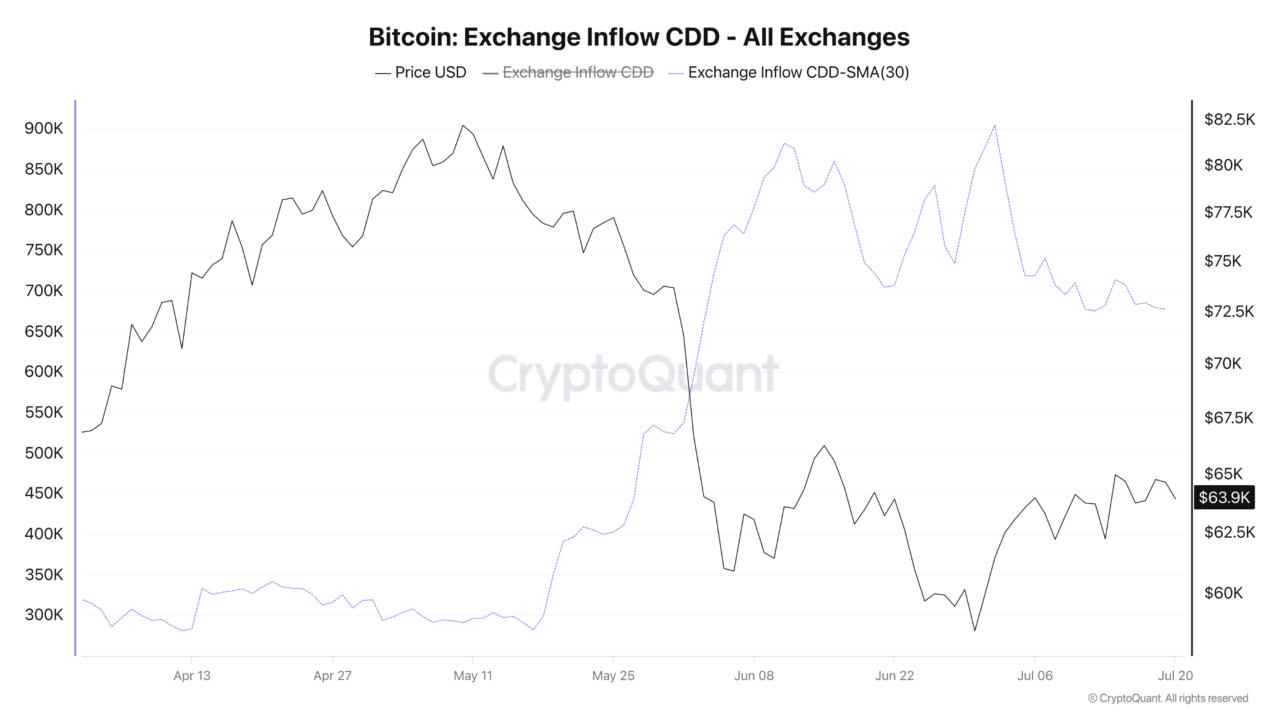
Fewer long-term holders are moving coins, and with that group nursing losses of only about 6%, the setup leans constructive and raises the odds of a faster recovery from current levels.
The exchange reserve reflects that shift, and although long-term holders do not dominate the reserve, they contribute to a decline that has carried it from a high of 2.718 million $BTC to 2.704 million $BTC.
That drop returns the reserve to its late-June footing, around the 24th of June.
Will US investors keep funding?
Economic pressures and the threat of resurgent inflation still weigh on the market.
Inflation cooled over the past week on official readings, yet concern has climbed as the conflict involving the US, Iran, and Israel has escalated. Oil has answered the tension, with WTI crude climbing to $85.59 at Monday’s open, its highest level since the 12th of June.
The inflation worry runs largely through oil, since rising crude lifts production costs across the economy and increases the risk-off mood—and Bitcoin depends on risk-on appetite. Should oil continue to climb, US investors may reduce their exposure through spot US Bitcoin ETFs.
Final Summary
- Long-term holders have eased their selling, now offloading at a 6% loss versus 27% earlier.
- Bitcoin still needs a risk-on appetite, so rising oil and fresh inflation fears could push US investors to trim exposure.