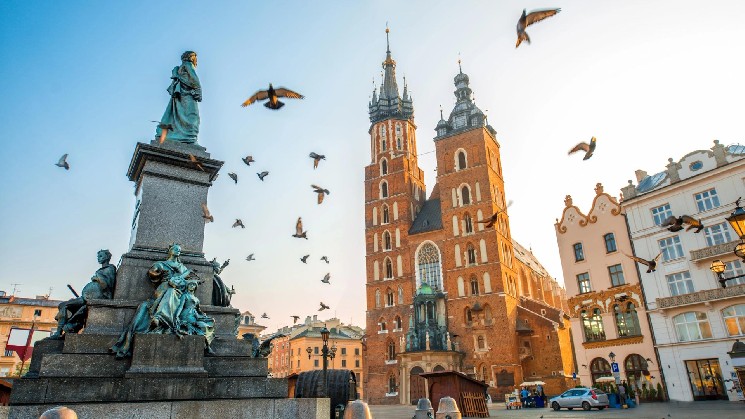
The end of MiCA’s transition period was predicted to mark the beginning of a more mature European crypto industry for all EU member states, and in many respects, it will —or at least, it should. Europe now has a regulatory framework capable of providing consumers with greater protection, institutions with more certainty and compliant digital asset businesses with a clearer foundation for operating across borders.
Yet regulation never happens in a vacuum, and the experience of the past 18 months has exposed a significant divide between European markets, creating a fragmented regulatory landscape. While most EU countries have been able to turn MiCA into an opportunity, Poland’s domestic crypto industry has been caught between a new European regulatory regime and a political bind to establish the domestic framework needed to support it.
Poland should have been one of MiCA’s greatest beneficiaries. It had a substantial community of over 2,000 registered virtual asset service providers, experienced entrepreneurs, one of the EU’s largest economies, and one of Central and Eastern Europe’s most established crypto ecosystems. Yet, as Europe moves into its regulated future, those in Poland have been left questioning whether the crypto industry they knew and loved will ever be the same again. For many, the dream and ambition crypto once offered has been well and truly snuffed out.
Mateusz Kara is the Founder and CEO of Morphic Financial Group, the London-based holding company building a new generation of regulated digital financial services businesses across Europe.
Poland’s self-inflicted terminal blow
MiCA was designed to create a common regulatory framework across all 27 member states, but the transition toward it has been anything but equal. When Poland’s politicians were unable to prevent the worst from happening, the EU did little but watch.
Poland became trapped in a domestic political battle over how the regulation should be implemented. The disagreement centered on competing arguments over consumer protection and national security on one side, and concerns that excessive regulation would drive Polish crypto companies abroad on the other.
On July 1, Poland’s Ministry of Finance confirmed that the MiCA transition period had ended and that registration on Poland’s existing virtual currency register no longer provided the legal basis to operate as a VASP or CASP. From that point, crypto services could only be provided by entities holding valid MiCA authorization. The gulf between the scale of that existing ecosystem and the number of businesses able to continue under MiCA illustrates the severity of what has happened.
Despite this, MiCA will ultimately be positive for European crypto. Digital assets could never remain permanently outside the standards expected of mainstream financial services. If blockchain infrastructure and stablecoins are to become meaningful components of payments, settlement and institutional finance, companies operating in the sector must earn the trust of banks, businesses, regulators and consumers. The validation MiCA provides the industry should allow it to start solving real-world problems at a scale it has previously struggled to achieve.
Other major financial markets are moving in the same direction. The UK’s FCA is introducing a comprehensive cryptoasset regime, with applications beginning in 2026 ahead of the new rules taking effect in October 2027. The FCA explicitly describes its objective as strengthening consumer protection while creating a competitive environment for responsible crypto innovation.
That is the paradox of MiCA. Europe may emerge with fewer crypto companies, but also with a stronger, more trusted and ultimately more economically significant digital asset industry for its users and creators.
Can Poland come back swinging?
When no clear path has been set out, the outcome remains unknown for now. After watching one of Europe’s most vibrant crypto communities reach the end of the MiCA transition without the domestic regulatory pathway it needed to protect an ecosystem of around 2,000 registered entities, many in Poland may look back at 2026 as the year European crypto finally grew up, and one of Poland’s brightest economic ambitions faded into darkness.
Note: The views expressed in this column are those of the author and do not necessarily reflect those of CoinDesk, Inc. or its owners and affiliates.

-
1
Chainalysis-run sting targets child exploitation networks with aid of Binance, Coinbase
-
2
A 3% token move just triggered $36 million in Ethereum DeFi liquidations
-
3
Las Vegas businessman convicted in $24 million ‘AI supercomputer’ crypto Ponzi scheme
-
4
Bitcoin’s surging price faces 1 key level that could signal if the bear market is really over
-
5
A bitcoin short squeeze for the ages as futures open interest collapses
-
6
Bitcoin extends 7-day advance to roughly 25%
-
7
Solana ETFs extend growth streak to 5 days after year’s biggest inflows
-
8
U.S. widens Iran crackdown to encompass crypto, gold, shipping and technology
-
9
Franklin Templeton and Hashkey roll out U.S. tokenized money fund in Asia
-
10
Live updates: Bitcoin rejected at $81,000 as 50-week moving average caps rally


Anvil is a shared on-chain collateral layer built on a programmable letter of credit: reserve assets as a guarantee -no loan, no interest, keep custody & yield.
Anvil is a shared on-chain collateral layer built on a programmable letter of credit: reserve assets as a guarantee -no loan, no interest, keep custody & yield.
Why it matters:
Anvil is a shared on-chain collateral layer built on a programmable letter of credit: reserve assets as a guarantee -no loan, no interest, keep custody & yield.
 Pass the Clarity Act
 The hard truth is that the Clarity Act is an anti-crypto bill
 Strengthen the Clarity Act