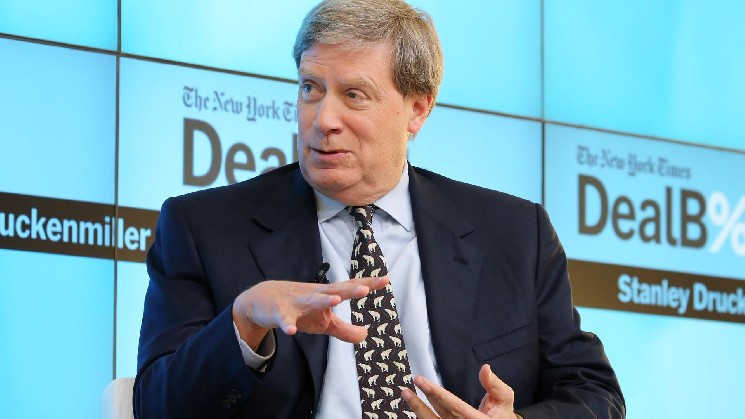
Billionaire investor Stanley Druckenmiller, a former mentor to U.S. Treasury Secretary Scott Bessent, has a lesson for his onetime protege: governments cannot indefinitely fight market fundamentals.
That lesson comes in response to the Treasury’s recent decision, under Bessent’s leadership, to increase bond buybacks to $4 billion in an effort to tame longer duration yields or borrowing costs, which recently hit the highest since 2007.
Druckenmiller’s point is that such interventions may offer temporary relief but cannot overcome the underlying forces pushing yields higher, namely nominal growth rate, large fiscal deficits and a growing government debt burden. The federal debt recently hit the $40 trillion mark for the first time ever.
“Governments defending prices against fundamentals always lose,” Druckenmiller wrote in an opinion piece for The Wall Street Journal, adding that, “rising interest rates are a signal of trouble ahead [and] artificially suppressing it heightens the danger.”
He argued that markets gather and process information far better than any committee of people ever could. The long-term Treasury yield acts as a natural check on how much the government can borrow. Take that check away, he said, and you also take away the pressure on politicians to stay fiscally responsible.
No need for intervention
Druckenmiller argued that the planned intervention makes little sense because the elevated 10-year yield simply reflects the nominal growth rate, meaning financial conditions remain accommodative rather than restrictive. Conditions become restrictive only when the yield rises higher than the growth rate.
The 10-year Treasury yield, which influences borrowing costs across the economy from mortgage rates to student loans, has risen 50 basis points this year to 4.70%. The 30-year yield has climbed 34 basis points to 5.22% and at one point hit a 19-year high of 5.335%.
These yields have largely held steady since the Treasury announced the buyback on Wednesday while hard assets like bitcoin and gold have risen sharply in hopes that more aggressive intervention could be announced soon.
Druckenmiller’s view aligns with other analysts who believe the bond buyback may temporarily cap rising yields, though it will not alter the broader upward trend. This perspective views the intervention as a short-term measure rather than a reversal of the structural market direction.