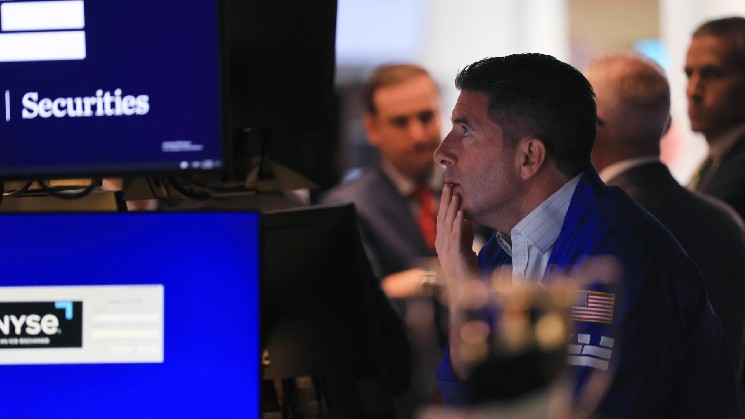
The Securities and Exchange Commission (SEC) opened a new path for tokenized stock trading in the U.S. last week, adding momentum to a technology that has swept through financial markets over the past year. TD Cowen, however, doesn’t expect investors to rush through the door.
The agency’s new Innovation Exemption creates a five-year framework for qualifying tokenized securities venues to operate automated market maker pools without registering as exchanges.
Certain liquidity providers can also avoid dealer registration, subject to conditions. The move came just days after the Clarity Act failed to advance, leaving broader crypto market structure legislation stalled.
But Reid Noch, vice president of U.S. equity market structure at TD Cowen, expects the new market to remain small, at least for now.
“We expect limited near-term adoption among both domestic retail investors and institutions,” Noch wrote in a paper on Friday. “U.S. investors already have efficient access to the underlying shares, and tokenized venues must offer a compelling benefit to offset limited liquidity and additional operational complexity.”
That gets to the central problem for tokenized stocks: they need to solve something the existing U.S. stock market doesn’t.
The SEC framework allows trading through automated market makers, or AMMs, rather than a traditional order book. An AMM holds pools of assets and uses preset rules to price trades. That could allow stock tokens to trade around the clock as long as a pool has enough assets.
But round-the-clock trading does not necessarily mean better trading, according to Noch, as thin liquidity can produce poor prices.
The SEC has also placed tight limits on its experiment. Tokens must represent NMS stocks and preserve the economic interest, dividends, voting rights and liquidation rights attached to the underlying shares. Third-party tokenizers must notify a company before trading its stock, giving the issuer 30 days to object. Trading volume is capped.
Those requirements could make the U.S. model harder to adopt than tokenized stock products already offered overseas.
Issuer interest is another question.
“Our conversations with dozens of issuers, including several highly retail-facing, have revealed minimal interest in tokenizing their stocks outside crypto-adjacent companies such as Figure,” Noch wrote.
Figure offers a glimpse at the size of that hurdle. Its Nasdaq-listed FIGR shares trade alongside blockchain-native FGRS shares that carry the same economic exposure and voting rights. Yet 99.9% of Figure’s notional trading took place through its traditional listed shares during the 24-hour period examined by TD.
Leave a Reply
You must be logged in to post a comment.