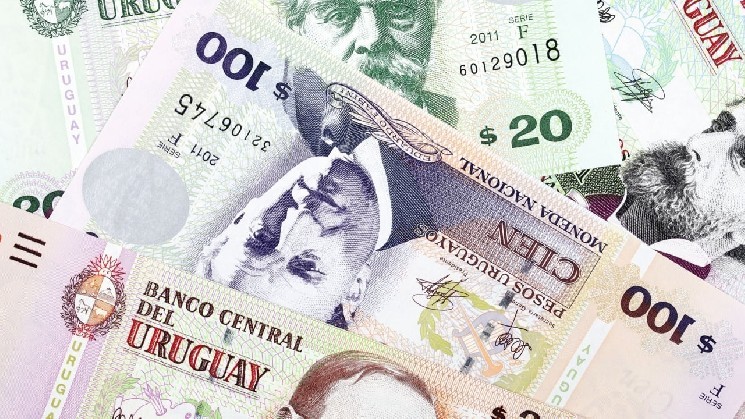
Uruguay is in the initial stages of studying the implementation of a digital currency as part of a restructuring process. Adolfo Sarmiento, the former manager of economic policy and markets, has been reassigned to oversee the project.
Uruguay Jumps on the Digital Currency Bandwagon as Part of Restructuring Process
The Central Bank of Uruguay is undertaking a deep restructuring that will include an analysis of a potential digital-currency implementation in the country’s economy. According to local media, this process started last August, when the institution removed Adolfo Sarmiento, the manager of economic policy and markets, from his position, without clarifying the reasons behind this move.
Most recently, the bank reported that Sarmiento’s removal was part of a “new governance, following international best practices, with the proposed creation of the position of Chief Economist as well as a General Management.”
In addition, the bank stressed that this new structure comprised a new, “mature phase of the regime’s operation” that required “fresh perspectives for adjustments in processes, approaches and competencies.” The modifications in the bank structure would respond to a modernization push.
To this end, Sarmiento, who has ample experience in the digital currency area, will be put in charge of a new project that includes the “analysis and evaluation of digital currency and its eventual implementation in Uruguay,” according to the bank.
The Central Bank of Uruguay was one of the pioneers in running a digital currency pilot in Latin America, having issued the e-peso, a digital equivalent to the Uruguayan peso, back in 2017.
At that time, Mario Bergara, president of the central bank, stated that the issuance answered to the cost of printing physical bills, the difficulties of distributing these bills to all regions, and the opacity promoted by physical cash.
Nonetheless, the pilot was terminated and no digital currency was issued, registering over 66,000 operations, including peer-to-peer transactions and payments.
Read more: Uruguay to Launch Digital Currency, “Not Bitcoin” it Stresses
Read more: New Draft Law in Uruguay Could Legalize Crypto as Payment Method