
As stablecoin and cryptocurrency adoption accelerate worldwide, emerging markets face mounting risks to monetary sovereignty and financial stability, according to a new report from Moody’s Ratings.
The credit rating service warned that widespread use of stablecoins — tokens pegged 1:1 with another asset, usually a fiat currency like the US dollar — could weaken central banks’ control over interest rates and exchange rate stability, a trend called “cryptoization.”
Banks could also “face deposit erosion if individuals shift savings from domestic bank deposits into stablecoins or crypto wallets,” the report said.
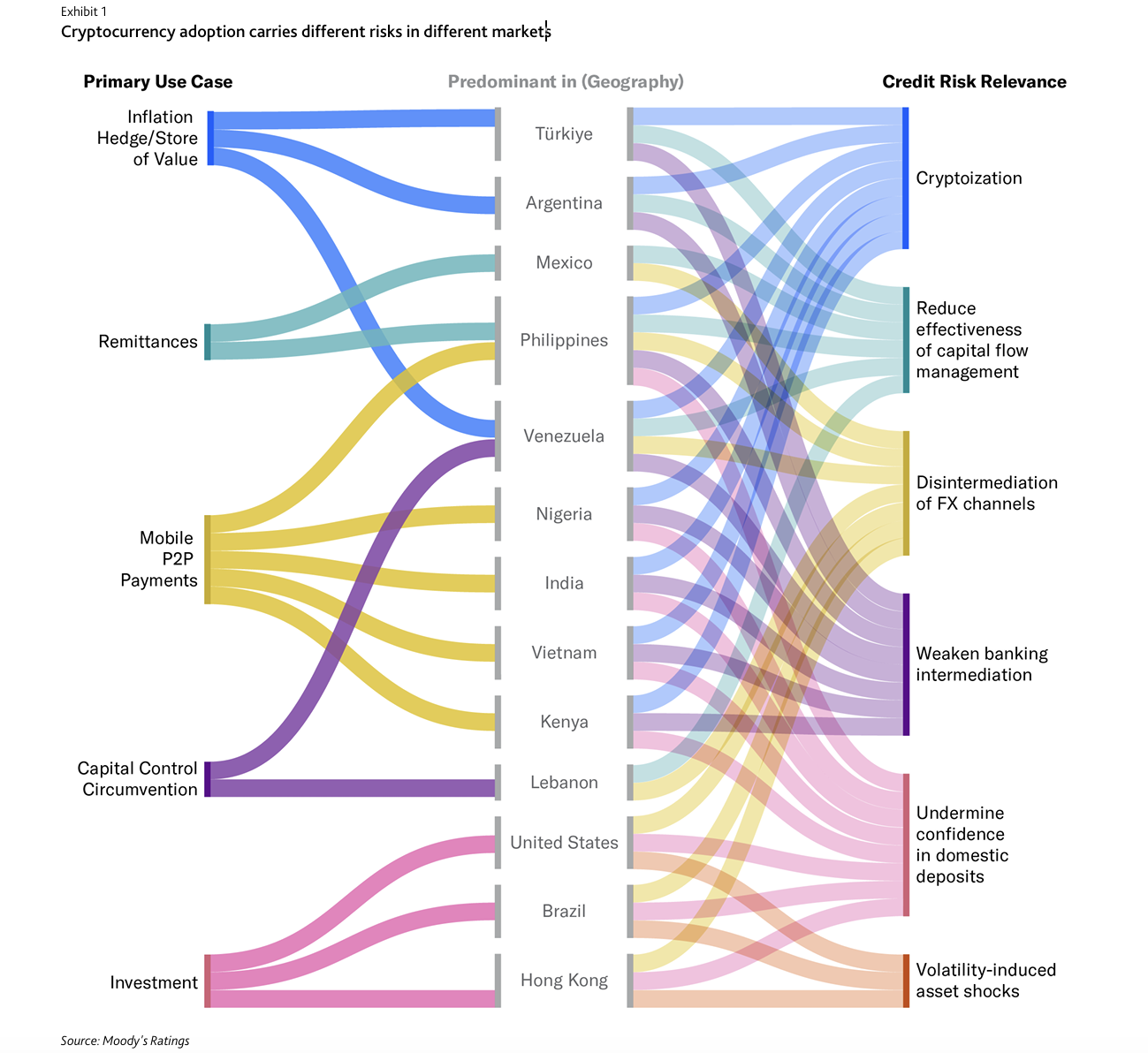
Moody’s said digital asset regulations around the world remain fragmented, with fewer than one-third of countries implementing comprehensive rules, exposing many economies to volatility and systemic shocks.
While regulatory clarity and enhanced investment channels often drive adoption in advanced economies, Moody’s said the fastest growth is in emerging markets — particularly in Latin America, Southeast Asia and Africa — where usage stems from remittances, mobile payments and inflation hedging.
“[…] the rapid growth of stablecoins, despite their perceived safety, introduces systemic vulnerabilities: insufficient oversight could trigger runs on reserves and force costly government bailouts if pegs collapse,” Moody’s said.
The agency said that the divergence highlights not only the potential for financial inclusion but also the mounting risks of financial instability if oversight fails to keep pace.
In 2024, global ownership of digital assets reached an estimated 562 million people, up 33% from the previous year.
Related: Singapore New Crypto Rules: $200K Fines, Jail Risk
Regulations in Europe, the US and China accelerate
Though much of the world still lacks clear rules around cryptocurrency and stablecoins, Europe, the United States and even China have been making progress over the last year.
On Dec. 30, 2024, after a phased rollout, the remaining provisions of the EU’s Markets in Crypto-Assets (MiCA) regime were implemented. MiCA is the bloc’s crypto rulebook, standardizing licensing for service providers and setting reserve and disclosure requirements for stablecoins.
In the US, the GENIUS Act became law on July 18, establishing enforceable standards for issuing and backing stablecoins.
With Europe and the United States rolling out stablecoin regulation, China appears to be changing course.
After banning crypto trading and mining in 2021, Beijing expanded its pilots for its digital yuan and, according to recent reports in August 2025, is weighing tightly controlled yuan-backed stablecoins.
On Thursday, the People’s Bank of China (PBOC) opened a new operations center in Shanghai for the digital yuan, aiming to focus on blockchain services and cross-border payments as stablecoin development continues.
Magazine: US risks being ‘front run’ on Bitcoin reserve by other nations — Samson Mow