Afghanistan’s recent nationwide internet outage has underscored a critical weakness in the world’s leading decentralized blockchains — their dependence on centralized internet providers that remain vulnerable to government intervention and technical failures.
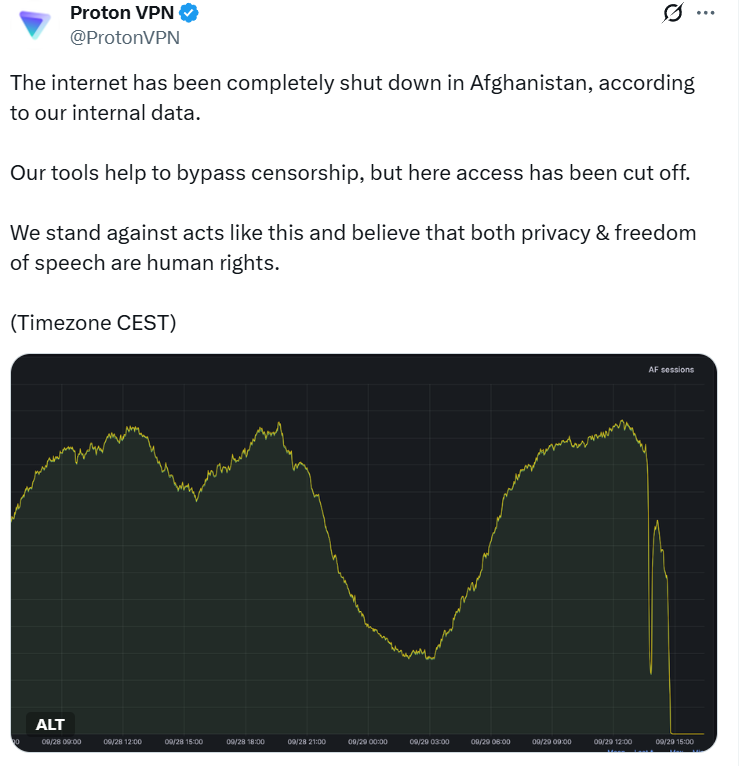
The country suffered a near-total internet shutdown that lasted about 48 hours before connectivity was restored on Oct. 1, Reuters reported. The disruption was reportedly ordered by the Taliban administration, though officials later blamed “technical issues” involving fiber optic cables.
While blockchains aim to provide people with a public, censorship-resistant network for value transfers, their reliance on centralized internet providers makes these use cases challenging during internet outages.
“The Afghanistan blackout is not just a regional connectivity crisis: it is a wake-up call,” according to Michail Angelov, co-founder of decentralized WiFi platform Roam Network. “When connectivity is monopolized by a handful of centralized providers, the promise of blockchain can collapse overnight,” he said.
The nationwide internet and mobile data services outage affected about 13 million citizens, according to a September report from outlet ABC News. This marks the first nationwide internet shutdown under the Taliban rule, following regional restrictions imposed earlier in September to curb online activities deemed “immoral.”
The Taliban denied the ban, blaming the internet outage on technical issues, including fiber optic cable problems.
Iran has also been facing internet censorship issues since the start of its conflict with Israel.
The Iranian government shut down internet access for 13 days in June, except for domestic messaging apps, prompting Iranians to seek out hidden internet proxy links for temporary access, The Guardian reported on June 25.
Related: $11B Bitcoin whale returns with $360M BTC transfer after 2 months
DePIN projects are building decentralized internet infrastructure
The Afghanistan blackout adds momentum to calls for decentralized connectivity solutions that remove single points of control.
Decentralized wireless networks are emerging as alternatives to centralized internet providers, as part of a broader technological shift known as a decentralized physical infrastructure network, or DePIN.
Roam aims to build a smartphone-powered decentralized wireless network that crowdsources mobile signal measurements to create a “living map of connectivity.”
Along with the project’s incoming eSIM implementation, this enables devices to automatically select the best available internet options, including public carriers, a private mesh, or a peer-powered local network.
“Roam users can see in real time what works where: no guesswork during outages,” which ensures a connection even when “centralized backbones fail,” said Angelov
Related: $10B in Ethereum awaits exit as validator withdrawals surge
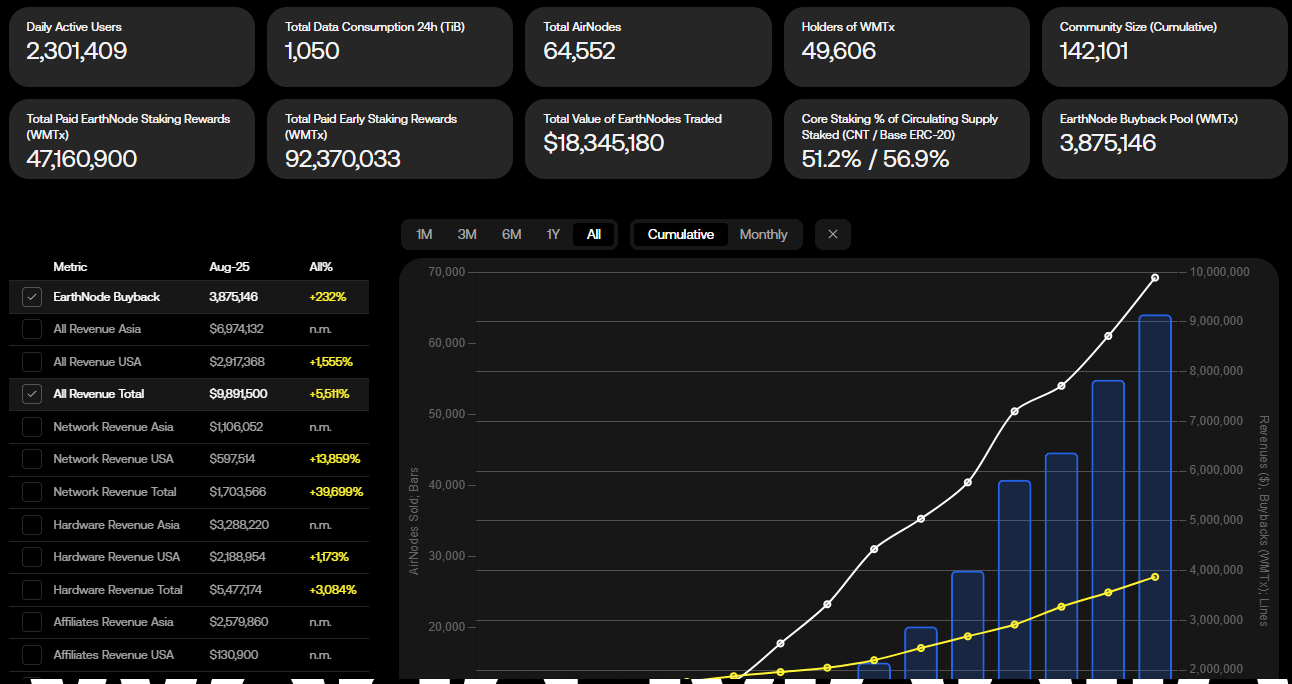
World Mobile is the largest decentralized network with 2.3 million daily active users, spanning over 20 countries, according to data from worldmobile.io
The project surpassed $9.8 million in total revenue in August, which represents revenue distributed across AirNode operators, stakers and other contributors.
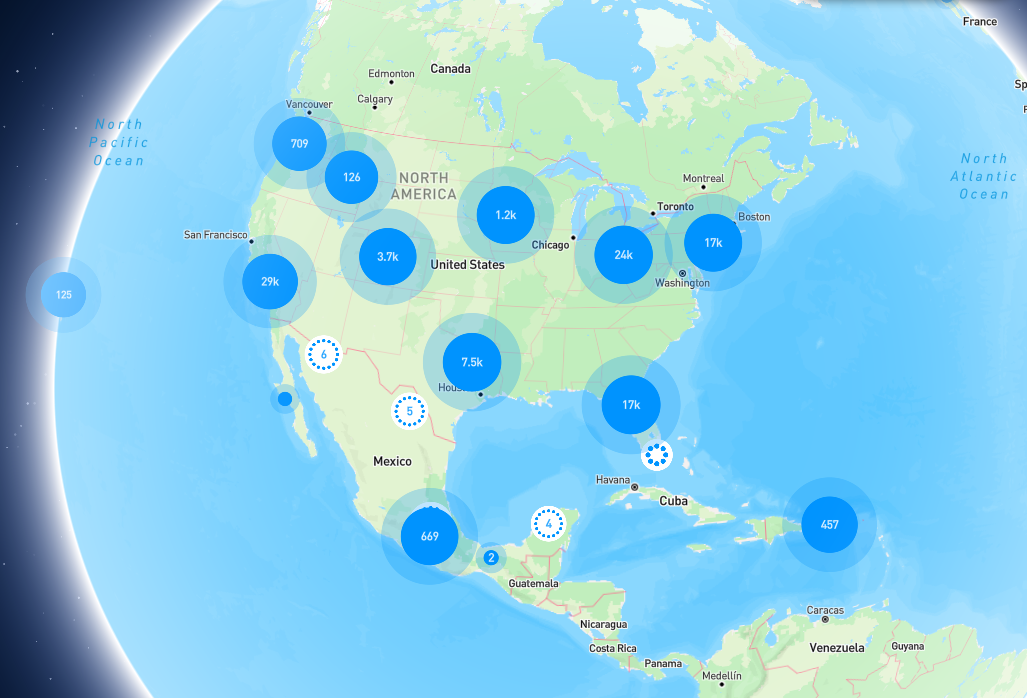
Helium is the second-largest decentralized wireless network, with over 190 countries and 112,000 total hotspots worldwide. It claims to have over 1.3 million daily users on its decentralized network.
Users are incentivized to host a hotspot for internet coverage through Helium (HNT) token rewards.
Advocates say blockchain technology’s promise of financial freedom and censorship resistance cannot be fully realized until the underlying internet itself becomes more distributed.
As Angelov put it, “If decentralization stops at the protocol layer, we haven’t really solved the problem — we’ve just shifted where the control lies.”
Magazine: Most DePIN projects barely even use blockchain — True or false?