One of the most significant macroeconomic developments of the month is about to begin for markets, as the U.S. CPI report is expected to be released in two days. The April Consumer Price Index (CPI) report may help cryptocurrency traders decide whether Bitcoin will experience another wave of volatility brought on by shifting Federal Reserve expectations, or continue its recent comeback toward new highs.
Effect on Bitcoin
Bitcoin is currently exhibiting significant technical momentum. Following its recent recovery of the 50-day and 100-day moving averages, Bitcoin is currently making an effort to break through the psychologically significant $82,000 area. Higher lows have been forming on the daily chart since early April, and the RSI is still above 60, which is usually an indication of persistent bullish pressure rather than fatigue.
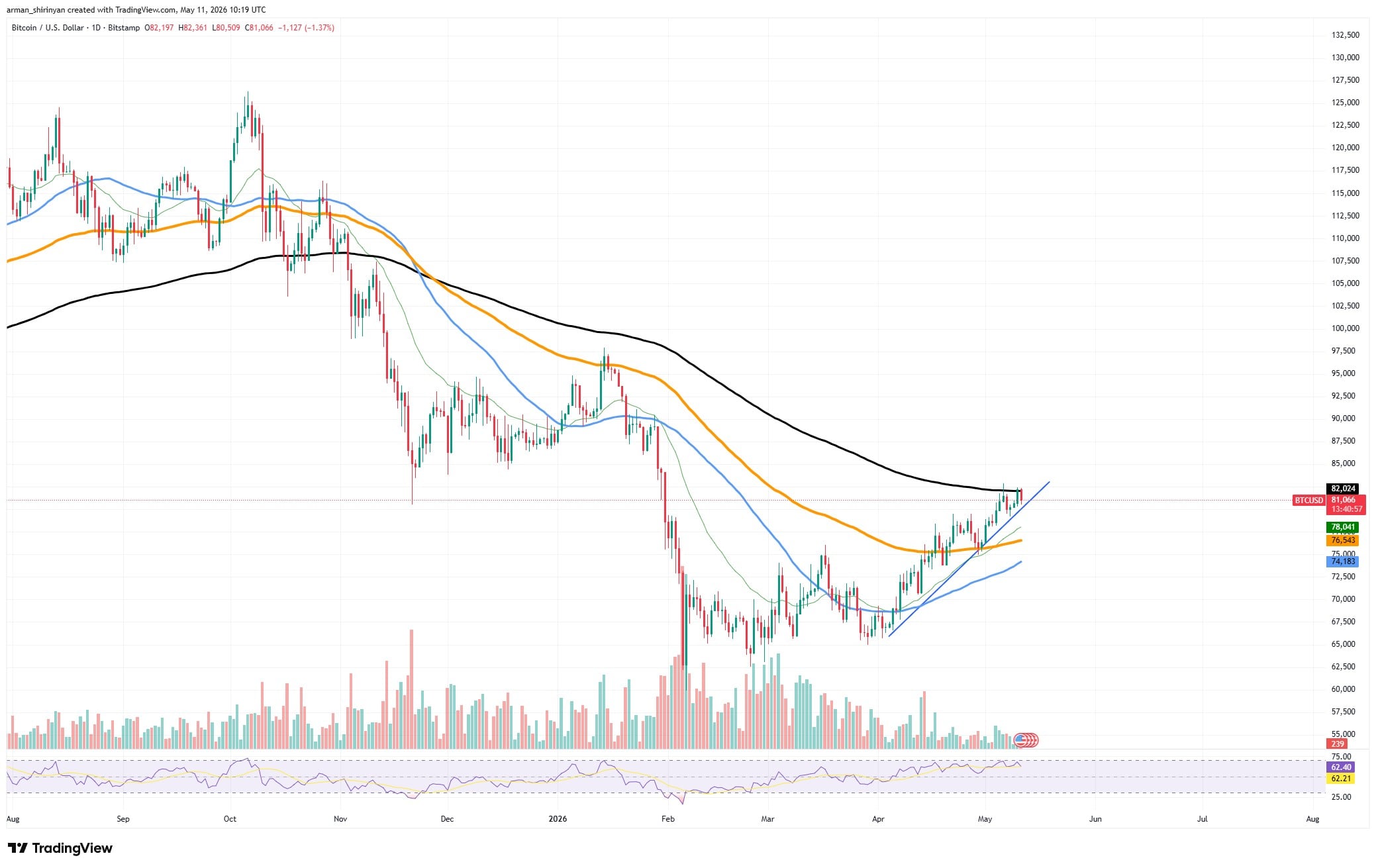
Markets may start pricing out possible rate cuts for later in the year if inflation turns out to be higher than anticipated. Increased interest rates boost U.S. Treasury yields and the U.S. dollar, while lowering interest in riskier investments such as cryptocurrencies. In that case, short-term selling pressure may be applied to Bitcoin, especially given its recent robust recovery.
However, in case of a lower CPI print, inflation decline will be a more plausible scenario. That result could raise expectations for liquidity across financial markets and rekindle hopes for future monetary easing. In the past, cryptocurrency has done best in situations where real yields start to decline and liquidity increases.
Cryptocurrency market’s positioning
The market’s current positioning is what makes this CPI release significant. Since the February capitulation event, which momentarily drove Bitcoin into the mid-$60,000 range, sentiment toward cryptocurrencies has already greatly improved. Since traders are no longer overly cautious, the market may respond to surprises in either direction more forcefully.
When it comes to inflation data, altcoins are frequently even more sensitive than Bitcoin. Speculative capital typically moves swiftly into riskier industries like AI tokens, meme coins, and lower-cap altcoins when CPI is favorable. However, those same sectors usually see more severe declines than Bitcoin if inflation picks up speed once more.
The crucial point for investors is straightforward: CPI is no longer merely a stock market phenomenon. It is now one of the main macro factors influencing risk appetite, liquidity, and cryptocurrency volatility throughout the entire digital asset market.