As Bitcoin [$BTC] pushed toward the $80,500–$81,000 region, miner activity increasingly shaped broader market momentum beneath the surface. Public mining firms distributed nearly 32,000 $BTC during Q1 2026 alone. That figure exceeded total liquidations recorded throughout all of 2025.
Part of that pressure emerged from tightening post-halving economics across the mining sector. Notably, the Hashprice hovered between $33 and $40 per PH/s per day, remaining near breakeven levels for older mining fleets. As profitability compressed, firms including MARA, Riot, CleanSpark, and Bitdeer increasingly converted reserves into cash.
Meanwhile, Glassnode data shows repeated miner distribution near Bitcoin’s highs suggests operators still prioritize liquidity preservation as post-halving profitability pressures remain elevated.
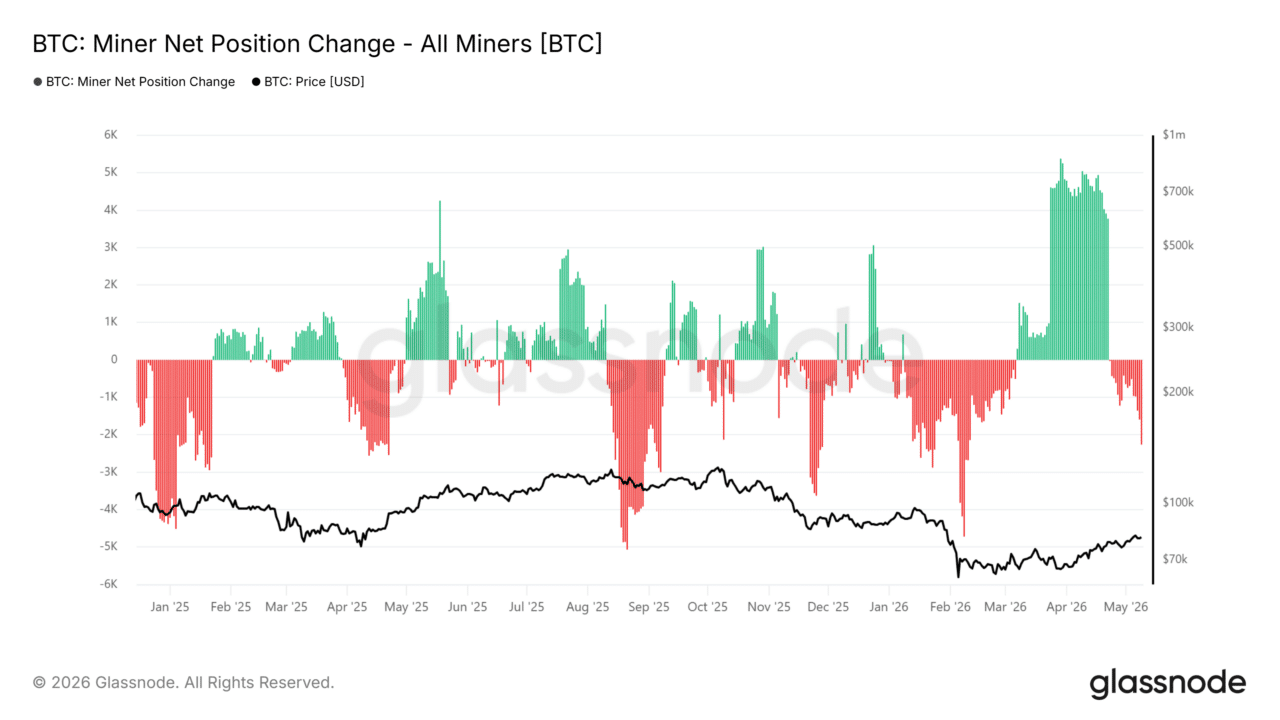
This implies that the rally is not purely speculative because the market continues absorbing heavy miner distribution near highs. However, persistent selling pressure can still increase volatility and weaken short-term breakout strength if demand slows.
As dormant Bitcoin supply suddenly returned to circulation, large Satoshi-era wallets increasingly shaped broader liquidity dynamics across the market. One 14-year-old wallet distributed 11,300 $BTC, worth nearly $750 million, while another accumulated roughly 7,000 $BTC, valued near $470 million.
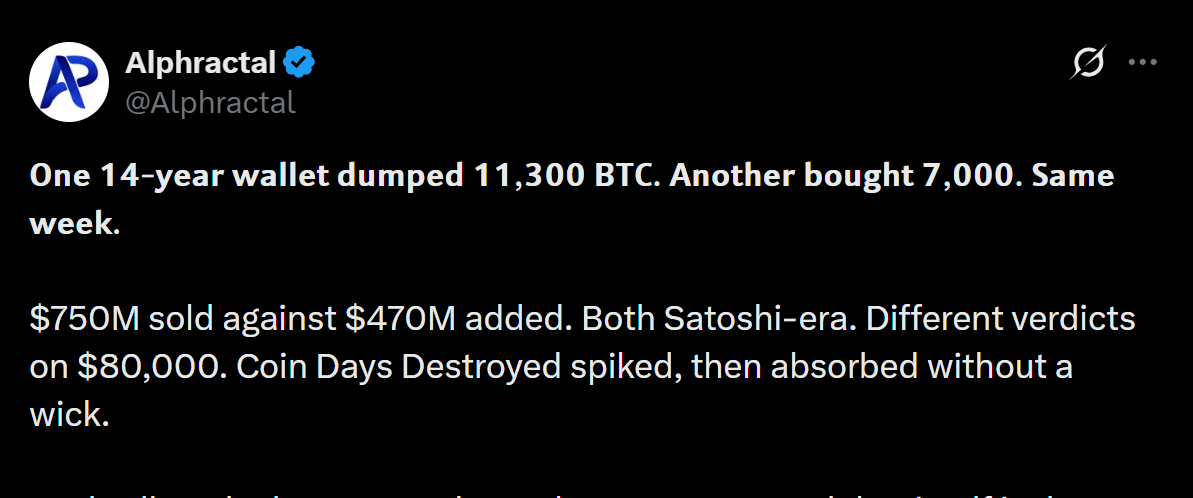
That divergence highlighted growing disagreement around Bitcoin’s current valuation range. Coin Days Destroyed (CDD) sharply spiked following the transfers, signaling older holders were actively repositioning after years of inactivity.
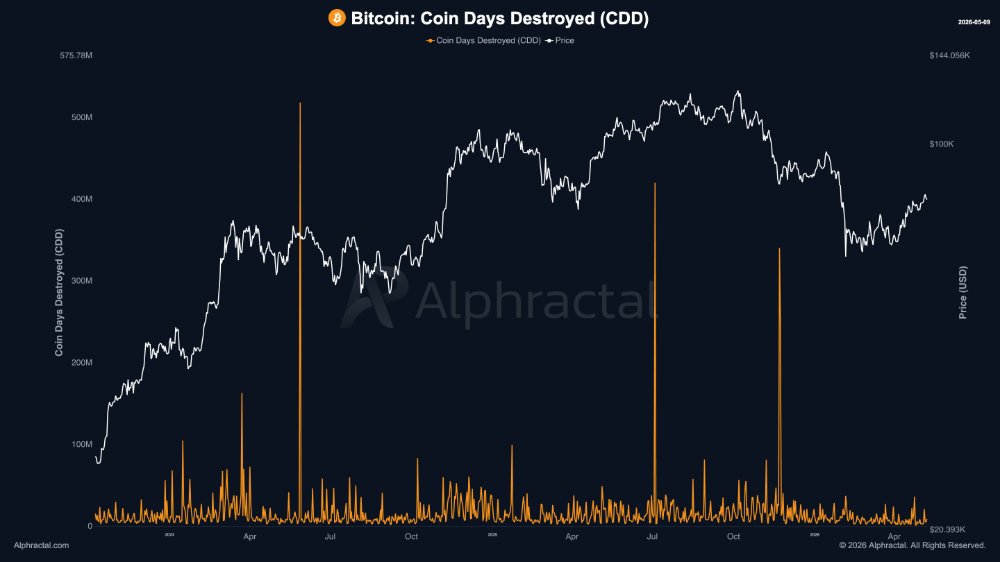
However, Bitcoin still defended the $80,000 zone despite aggressive sell-side pressure from Long-Term Holders (LTH). That resilience suggested strong spot demand continued absorbing distributed supply without triggering a sharp breakdown.
As accumulation and profit-taking intensified, the $80,000 region increasingly evolved into a critical liquidity and price discovery battleground.
Reactivated Bitcoin supply increases market tension
As older Bitcoin supply increasingly returned to circulation, volatility pressure steadily built around the market’s $80,000 liquidity zone. Recent spending spikes from over 5 years and Satoshi-era wallets injected additional supply into active trading conditions.
That behavior partly reflected profit-taking as Bitcoin approached the $81,000 region during May 2026. Older holders often distribute into strength, which increased psychological pressure as markets interpreted the activity as informed selling.
Meanwhile, exchange inflows briefly rose by several thousand $BTC during selective trading sessions. However, total Exchange Reserves still hold near multi-year lows between 2.1 million and 2.7 million $BTC.
That balance suggested buyers continued absorbing distributed supply despite rising sell-side activity. If Bitcoin maintains stability above $80,000, demand resilience may continue outweighing growing distribution pressure.
Final Summary
- Bitcoin absorbed aggressive miner and Satoshi-era wallet distribution, reinforcing strong demand around the $80,000 liquidity zone.
- $BTC’s resilience above $80K suggested that accumulation still offsets rising sell-side pressure.