Bitcoin traders are finally taking the price selloff seriously. The cryptocurrency’s fear gauge, the BVIV index, shows it.
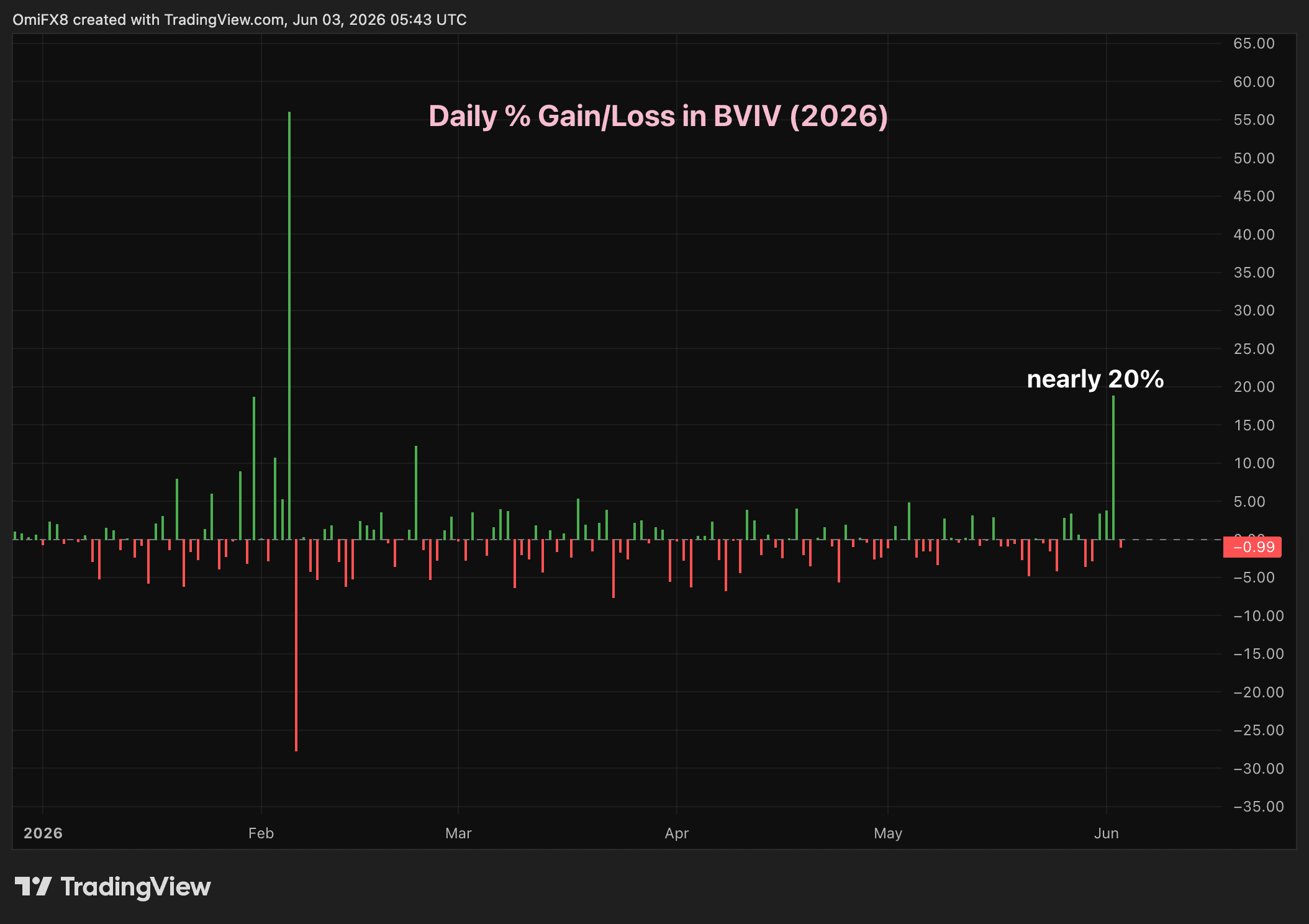
BVIV, which measures the 30-day implied or expected volatility in the cryptocurrency, surged nearly 20% on Tuesday to 46.45%. That’s the biggest single-day spike since Feb. 5, according to data source TradingView.
Here’s why it matters.
For roughly two months, the bitcoin market sentiment was calm. Even when $BTC dropped from its early May high of $82,000 to $75,000 last week, the market sentiment barely flinched. The BVIV actually remained around its year-to-date low of 40% during that move.
In other words, it was orderly selling. No panic. But that changed Tuesday as $BTC’s spot price fell over 6% to $66,000.
The BVIV index exploded with that price drop. The index is essentially a fear gauge. When it rises, traders are aggressively buying options to protect against further downside. Tuesday’s nearly 20% surge signals that protection buying is back.
To put Tuesday’s move in context: back on Feb. 5th, BVIV surged over 50% in a single day, hitting above 90% as bitcoin crashed toward $60,000. Tuesday’s jump is nowhere near that level. But the direction of the move is what traders should care about right now.
VIX like behavior
Think of BVIV like bitcoin’s version of Wall Street’s VIX fear gauge. Since U.S. bitcoin ETFs launched over two years ago, institutional players have flooded into the market. That institutionalization has created something interesting: BVIV now moves in the opposite direction of bitcoin’s spot price with increasing consistency. Price drops, fear spikes. Price rises, fear fades.
That’s a relatively new dynamic for crypto, but not so much on Wall Street where the S&P 500 and its fear gauge, the VIX, have been inversely correlated for decades.
The takeaway is that after two months of unusual calm, fear is creeping back into the bitcoin market. Whether Tuesday’s spike is a one-day blip or the start of a sustained volatility regime remains to be seen.